By a Free Our Unions supporter
The election of a Labour government, committed to repealing at least the two most recent sets of anti-union legislation, is a step forward for union and workers’ rights. How much of a step forward depends substantially on how effectively the wider labour movement is able to organise to push Labour to go further, and faster.
Without organised pressure, it is much likelier that Labour will renege on even its existing commitments, let alone extend them.
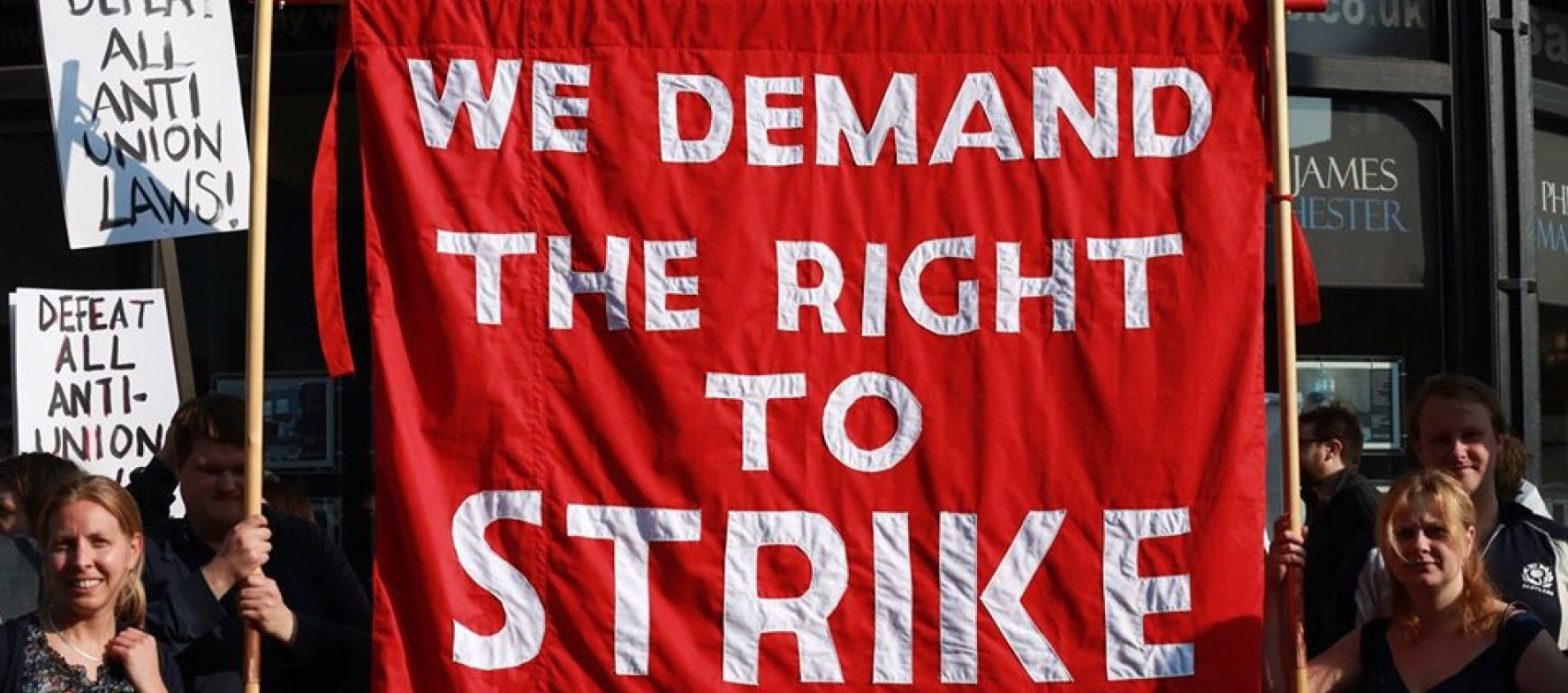
It’s important the labour movement continues to press the demand, which is the policy of almost every union and of the TUC, for the repeal of all anti-strike laws, and their replacement with legally-enshrined positive rights.
There is also a place for targeted campaigning around specific laws, for example the prohibition on striking in solidarity with other workers. If this law was repealed, it would allow directly-employed workers to strike in support of and alongside outsourced workmates, thereby strengthening both groups’ demands. Angela Rayner has said Labour will “oversee the biggest wave of insourcing of public services for a generation”: why wouldn’t the party want to give workers greater freedom to fight for its own declared policy at workplace level?
Campaigning culture in the labour movement has diminished to a significant degree, with issue-based campaigning now typically (ironically) “outsourced” to external bodies, or reduced to online petitioning efforts or photo-ops for a few senior union officials. Developing a culture where unions use their structures, that give them a base in every town and city in the country, to mobilise workers to take political action will take time. But we can make a start.
Free Our Unions supporters are pushing within their own union branches and regions for local actions including street stalls, demonstrations, and lobbies of MPs at local and national level. We want to see the labour movement scale that action up, including by supporting any group of workers that takes action in defiance of the laws, such as the Cammell Laird shipyard workers who recently refused to cross RMT picket lines. The charter produced by the CWU Greater London Combined branch can also be a basis for organising discussion and action.
If you want to organise within your union for it to do more on this issue, please contact Free Our Unions to discuss how we can work together.
 Free Our Unions