Labour Party Policy Forum proposal: repeal all anti-union laws

Supporters of Free Our Unions active in the Labour Party and in Labour-affiliated unions have been promoting the below text as the basis for a submission to Labour’s ongoing Policy Forum policy submission process.

We encourage anyone who wants to see Labour take a strong stand against all anti-union legislation to adapt and use our text.

The process closes on 30 June. For more information, see here.

REPEAL ALL ANTI-UNION LAWS: FOR FREE TRADE UNIONS!

The Covid-19 crisis has reinforced why our party must campaign for repeal of all anti-trade nion laws – not just the 2016 Trade Union Act, but right back to the Thatcher government’s first one in 1980 – and their replacement with strong legal rights for workers and unions, including a strong and unrestricted right to strike.

Particularly faced with urgent issues like safety (but more generally too), we cannot and should not have to go through an elaborate and time-consuming process in order to take industrial action. We must insist that going on strike should be at least as easy as it was in 1979.

The anti-union laws – all of them, not just the 2016 Act – suppress the right to strike, suppress workers’ organisation, and prevent workers for standing up for their rights and for safety. While they remain, our movement is fighting with its hands tied behind its back.

We must begin by working with the unions to launch a stepped-up campaign to defeat the Tories’ proposed attack on transport workers and unions through the introduction of “minimum service” requirements, which involves abolishing even a residual right to strike for a huge swathe of workers.

Conference policy is very clear:

• Conference 2005 defied the Blair leadership to pass a motion calling for legalisation of solidarity action.
• Conference 2015 unanimously passed a motion calling for the next Labour government to “legislate for strong rights to unionise, win recognition and collective bargaining, strike, picket and take solidarity action”.
• Conference 2017 unanimously passed a motion calling for repeal of the 2016 Act and “anti-union laws introduced in the 1980s and 90s”; and a “strong legal charter of workers’ rights”. (It also said: “the most effective way to maintain good rights at work is collectively through a union. Strong unions, freed from legal shackles and bolstered by positive legal rights, will be key to tackling poverty, insecurity and inequality… For unions to be effective, workers need an effective right to strike…”)
• Conference 2018 overwhelmingly passed a motion calling for a “radical government” committed to “abolishing anti-union laws”.
• Conference 2019 overwhelmingly passed a motion calling for “repeal of all anti-union laws”, specifically mentioning the right to take strike action for political reasons: “so that workers can freely take action over the climate”.
• Conference 2019 also voted to reference back the part of the NPF report on this issue, on the basis that it was not strong enough on the right to strike and repealing the anti-union laws.

The following Eastern Region FBU policy elaborates the position we believe Labour should adopt and campaign for, based both on conference decisions and what is necessary and right:
• Complete and speedy repeal of all anti-union laws.
• Strong legal rights for workers to join, recruit to and be represented by a union; strike/take industrial action by a process, at a time and for demands of their own choosing, including in solidarity with any other workers and for broader social and political goals; and picket freely.
• The right to reinstatement for workers found to have been sacked unfairly. A complete ban on dismissal for industrial action, however long it lasts. Full rights from day one of a job.
• Strong rights for unions to access workplaces, win recognition, and establish collective bargaining, including sector-wide bargaining.
• Unions’ right to decide their own policies and activities, determine their own structures and rules, and spend their funds as they choose, free from state and employer interference, in line with ILO Conventions and the European Convention on Human Rights.

We would like to conclude by quoting from a pamphlet written by Bob Crow, then RMT Assistant General Secretary, and John Hendy QC (in 1998):

“In order for the unions to fulfil the purpose of maintaining and improving the conditions of their members’ working lives, unions have to have the legal freedom to operate. That means they must demand that the anti-union laws are repealed.

“No doubt the demand for repeal will draw contempt, criticism and scare stories from the press. But the arguments in favour of repeal and replacement are formidable and irrefutable. Furthermore, the movement has its own culture, history, images and analysis which are as persuasive as anything the media can create.

“More importantly still, if the movement does not go on the offensive with its ideas and vision, there is left a void which is filled only by the ideas and vision of its enemies.”

Support Goldsmiths workers’ action

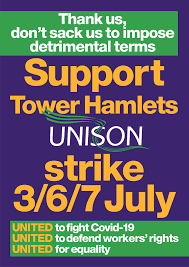
Education workers at Goldsmiths university in south London have launched a marking boycott, as part of a fight to resist job cuts. Workers in the Associate Lecturer and Graduate Trainee Tutor roles launched the boycott, and have since been joined by fixed-term teaching staff.

Their action has been taken “unofficially”, in confrontation with the anti-union laws. Free Our Unions sends our full solidarity to the workers. We reproduce their statement, from the website Precarious@Gold, below. A link to donate to their support fund can be found at the bottom of the article.

Overview:

Goldsmiths senior management team (SMT) is laying off 163 academics on fixed term contracts, along with 309 Associate Lecturers (ALs) and Graduate Trainee Tutors (GTTs). Having refused all of our requests to have our contracts extended until the autumn and be furloughed for that period (a solution which would have allowed Goldsmiths to retain its staff at low cost until student recruitment figures made clear whether we could be kept on longer term), the University is now simply allowing fixed term contracts to expire. 

These are redundancies on a huge scale: they will leave hundreds of academics unemployed during a recession and a pandemic, significantly increase workload for remaining staff and threaten the viability of undergraduate and postgraduate courses across the university. Furthermore, figures we have collected suggest around 75% of those being laid off are from a black and minority ethnic background: if these job cuts go ahead, Goldsmiths will lose a large proportion of its BAME teaching staff, leaving students with fewer nonwhite role models and a significantly narrower curriculum.  

We, Goldsmiths academics on fixed term contracts, will not accept this treatment. From today, Monday June 15th, we will join the marking boycott begun by our AL and GTT colleagues. In addition, we will work to rule until further notice. Our demands are for an extension of our contracts until October 31st, for SMT immediately to provide each of us with details on the timescale and process for review of our contracts, and for the University to meet and negotiate with us as a group. Further details, including a full list of demands, are below.

We do not want to take this course of action. We are deeply committed to working hard for our students and have no desire to cause them disruption. However, each time we have attempted, as individuals, to discuss our contractual situation with SMT, we have been ignored, told that no decision can yet be taken or given other unsatisfactory answers. We therefore have no choice but collectively to withdraw part of our labour. We also feel that our action, if successful in persuading SMT to renew contracts, will protect rather than undermine the Goldsmiths student experience in the long term.

Our demands:

  • Contract extensions All casualised contracts, including AL, GTT and FTCs, should be extended until the end of October, when it will be clearer from student recruitment figures and other financial indicators whether contracts can be renewed for a longer period. Given that the University has refused to furlough its casualised academic staff, it is up to SMT to investigate and offer financially viable ways to extend our contracts.
  • Clarity SMT must immediately contact all casualised workers whose contracts are due to expire this summer / autumn, including ALs, GTTs and fractional and full time workers on fixed term contracts, to give them a timetable for the review of whether their contract should be renewed, to arrange review meetings, and to make clear the criteria for the review process. Since arranging these meetings is well overdue, SMT should contact workers by June 19th.
  • Negotiation The University must  arrange to meet, at the earliest possible opportunity, representatives of University and College Union (UCU), along with elected representatives of those fixed term and casualised workers due to be laid off, to discuss with them planned levels of staffing, workload and student provision for the next academic year
  • Workload impact The University must publish estimates of the impact on workload for remaining staff of cutting 472 teaching roles.
  • Equality, diversity and racial justice The University must provide figures, where available, on the ethnic, gender and disability characteristics of the 472 staff to be laid off, and publish, by the end of June 2020, an equalities impact assessment of the plans to lay off 472 casualised workers.
  • Redundancy The University must  publish details of a system of enhanced redundancy payments to be offered in the event that any job cuts go ahead
  • AL hours The University must honour additional hours worked by ALs/GTTs during the lockdown: HR must ensure that Departmental Business Managers contact all ALs/GTTs and request pay claims for all hours worked in addition to contracted hours during the lockdown. 
  • Reduce pay inequality The University should enact temporary salary cuts to Senior Management, explicitly ringfenced to fund the contract extensions of ALs and GTTs (approx £2.1 million per year budget for ALs/GTTs). This should include the Warden’s Office, Executive and Governance Services, Finance Services, Goldsmiths Strategic Venture, Strategic Planning & Projects, Organisation and Strategic Services and Planning).

Our action:

From June 15th, academics on fixed term contracts will join the marking boycott begun by ALs and GTTs, and will continue this action until our demands are met.

  • We will boycott any outstanding assessment responsibilities, including marking and moderation, until the University meets our demands.
  • If called upon to mark work that has not been marked as a result of the AL/GTT marking boycott, we will refuse.
  • We will work to rule, i.e. perform only our contractual duties, until further notice.

Background:

The University has produced figures showing that 472 casualised workers, made up of 309 Associate Lecturers and Graduate Trainee Tutors and 163 academics on full time or fractional fixed term contracts, will be laid off during the summer and autumn of 2020.

Though SMT has refused to provide a demographic breakdown of those whose contracts will be terminated, figures we have collected suggest that 75% of those to be laid off are from black and minority ethnic backgrounds, and an overwhelming majority are women. This confirms the findings of other reports that show BAME people and women are heavily overrepresented among casualised academics. Goldsmiths has claimed it wishes to “address the BME degree attainment gap and wider racial justice issues”, but sacking hundreds of BAME teaching staff will leave all students, and particularly the 45% of Goldsmiths’ student body that is BAME, with fewer role models, a narrower curriculum and an impoverished all round educational experience. 

Communication from the University has been very poor over this issue, and academics on fixed term contracts feel they have been treated callously and with disrespect. Before the start of the COVID-19 pandemic, most of us had been told verbally by our heads of department that we would likely have our contracts renewed. Since then, the University has instead announced that all hiring was on hold and that SMT would “review” whether each fixed term contract should be renewed. None of our contracts have thus far been reviewed, however, and nor have any of us been given a timescale or process for this review. Our contracts end in a matter of weeks and we still have no clarity on whether we will be unemployed next academic year.

In order to offer a cheap solution that would allow the University to retain its staff, many fixed term workers requested to have our contracts extended for a short period, until October, and be furloughed for that period under the government’s Coronavirus Job Retention Scheme. The Associate Lecturers campaign similarly requested that ALs be furloughed for the same time frame. All requests were refused, with the HR Director Carol Ford, in an email to all staff sent June 8th, wrongly claiming that academic staff are not eligible for furlough, despite the fact that other universities including the University of the Arts London has furloughed casualised academics and the Universities Minister confirmed on April 8th that university staff could be furloughed.

The university seems intent on allowing our contracts, most of which end between June and September, to expire. This suspicion is reinforced by Carol Ford’s suggestion in her June 8th all-staff email that the University would “not be able to confirm AL/GTT requirements for the next academic year until student numbers and choices for the 20/21 academic year are clear”. We cannot wait until the autumn, well after most of our contracts expire, to find out if we will have a job at Goldsmiths next academic year. 

The University is not being open about the fact these layoffs constitute redundancy for a huge proportion (perhaps around half) of academic staff, which will surely mean significant increases in workload for remaining staff and/or cutting courses and reducing the teaching time to which students are entitled. As such, the University’s plans should be the subject of collective consultation with the unions – including the Student Union. 

Please donate to our solidarity fund for causalised staff facing job losses: https://opencollective.com/goldsmithsmutualaid

Solidarity with the #BlackLivesMatter strikers!

As protests continue in the USA and worldwide against racism and police brutality, we are beginning to see organised labour take action as part of the movement.

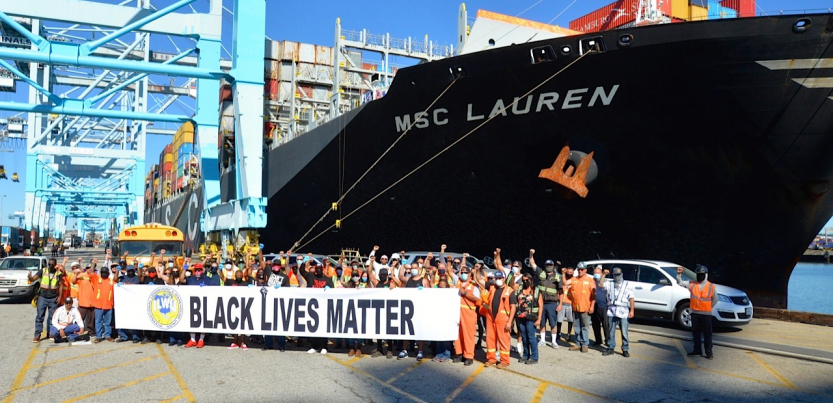
During protests in Minneapolis and New York, members of transport workers’ unions refused to drive buses for arrestee transport. On 9 June, members of the International Longshore and Warehouse Union (ILWU), a dockworkers’ union with a long history of striking over political issues, conducted a work stoppage to protest the murder of George Floyd. The stoppage, which involved locals in numerous west coast ports, lasted nine minutes, the length of time police officer Derek Chauvin knelt on Floyd’s neck.

Clarence Thomas, former Secretary-Treasurer of ILWU Local 10, said: “Fighting police murders and white supremacy is a class question. Let’s not forget that the vast majority of black people, and the vast majority of victims of police repression, are working class.

“For many years now, ILWU, and Local 10 in particular, has been protesting the racist policing of African Americans. And we understand that the way these murders can be stopped is when there are economic consequences. The working class has leverage — and we need to use it.”

Now ILWU members plan to respond to a call from activists for strikes to mark “Juneteenth”, the 19 June commemoration of the abolition of slavery in Texas, where slavery continued for two years after the signing of the Emancipation Proclamation in 1863. The ILWU’s Juneteenth strike is slated to last eight hours, and ILWU locals are also seeking coordination with the International Longshoremen’s Associaiton (ILA), the main east coast dockers’ union.

Anti-union laws features significantly in this picture. The ILWU is already facing the prospect of court fines that could bankrupt the union, thanks to a federal court ruling holding it responsible for losses incurred during a previous action the court deemed a “secondary boycott” – i.e., a solidarity strike, prohibited in the USA since 1947’s Taft-Hartley Act.

The Act also prohibits political strikes, a ban bolstered by a 2006 directive from the National Labor Relations Board general counsel, an office significantly empowered by Taft-Hartley, which said bosses could legitimately fire workers who took part in a 2006 migrant workers’ strike demanding a more liberal immigration policy. To get round these laws, the Juneteenth strike will be called in parallel with – i.e., on the same day and at the same time – as action in a separate, official, dispute. That is no firm guarantee, however, that employers and the state will not pursue further action against the ILWU.

All the more reason, then, for the international labour movement to organise solidarity. Free Our Unions is encouraging activists to post pictures in support of the strike; feel free to use this sign, or make your own.


Please also circulate this article in your own workplace/union to raise awareness of the issue, and propose practical solidarity initiatives. That might be something as simple as a photo call at work, or a meeting to discuss the issues, including how we might confront our own legal prohibition on political strikes and organise workers’ action against racism.

If organised labour enters the fight against racism as a strategic actor, enormous new possibilities are opened up. As Clarence Thomas put it: “The most effective way to stop police terror is by the working class taking action at the point of production: if the working class is to be heard, [organised] labour must shut it down.”

Further reading:

“West Coast Dockers Stop Work to Honor George Floyd”, Labor Notes, 11 June
“Dockworkers to Shut Down West Coast Ports in Memory of George Floyd”, The Nation, 11 June
“The Most Effective Way to Stop Police Terror Is Action at the Point of Production”, interview with Clarence Thomas in Jacobin, 6 June
“Protesters call for a black workers’ strike on Juneteenth”, Newsweek, 13 June
“Twin Cities Labor Mobilizes Against George Floyd Murder”, Labor Notes, 29 May
TWU Local 100 statement on the murder of George Floyd
“The Survival of the ILWU at Stake!”, CounterPunch, 12 February
“Labor Board Limits Political Strikes”, Labor Notes, 26 September 2008

Free Our Unions online forum, 24 June, 6:30pm

Workers’ action in the pandemic: organising against and around the anti-union laws

An online forum organised by Free Our Unions 

Wednesday 24 June, 18:30-20:30. Log in via Zoom here.

Facebook event here.

Britain’s anti-union legislation exists to prevent workers taking swift and effective action. Workers’ action during the pandemic has either simply ignored that legislation, or taken the form of refusals-to-work under health and safety legislation, legally distinct from “industrial action”. In the background is the Tories’ ongoing plan to bring forward new legislation imposing a “minimum service requirement” during transport strikes, effectively outlawing all-out strikes by transport workers.

This panel, organised by Free Our Unions, the grassroots campaign against anti-union laws, brings together worker activists from a range of industries to discuss how they have confronted, and/or been hampered by, anti-union legislation in their recent and ongoing struggles.

Speakers include:

Alex Marshall, TDL courier and chair of the IWGB Couriers and Logistics Branch

Marie Harrington, London Underground worker and RMT rep; chair of the RMT’s National Women’s Advisory Committee

Gregor Gall, industrial relations professor and labour movement activist

More tbc, including school workers and NEU activists.

Chair:

Riccardo La Torre, firefighter and FBU activist

Refusing unsafe work, industrial action, and the law: a briefing for workplace activists

This is a briefing for workplace activists on the differences between refusing unsafe work, as defined under health and safety legislation, and “industrial action”, under the terms of existing legislation including the anti-union legislation Free Our Unions fights to abolish. In legal terms, “refusing unsafe work” and “industrial action” are not the same thing!

The point of this briefing is not to suggest that the law is in some way “on our side”. Our campaign exists because we know the opposite is true! But it’s important to understand different legal categories, and what the law says about our rights. As ever, enforcing those rights is invariably a matter of the strength of collective organisation.


Employers may not lawfully cause any detriment to an employee who leaves a workplace that the worker reasonably believes poses a serious and imminent danger, or who takes steps to protect themselves or others. This is the relevant extract of the 1996 Employment Rights Act:

44. Health and safety cases.

(1) An employee has the right not to be subjected to any detriment by any act, or any deliberate failure to act, by his employer done on the ground that — …

(d) in circumstances of danger which the employee reasonably believed to be serious and imminent and which he could not reasonably have been expected to avert, he left (or proposed to leave) or (while the danger persisted) refused to return to his place of work or any dangerous part of his place of work, or

(e) in circumstances of danger which the employee reasonably believed to be serious and imminent, he took (or proposed to take) appropriate steps to protect himself or other persons from the danger.

(2) For the purposes of subsection (1)(e) whether steps which an employee took (or proposed to take) were appropriate is to be judged by reference to all the circumstances including, in particular, his knowledge and the facilities and advice available to him at the time.
Section 100 of the same Act states that dismissing an employee for doing either of these things is unlawful unfair dismissal.


So, there you go. It’s clear. You have the right not to put yourself and others in danger. Your employer may not lawfully punish you for doing so.

(d) establishes your right to leave, propose to leave, and not return to, a workplace you reasonably believe to pose serious and imminent danger;

(e) establishes your right to take steps (which may include refusing to carry out a particular task) to protect yourself and others.

(Note that the Act affords this right only to “employees”. However, the EU Directive from which it stems refers to the wider category of people with “an employment relationship”, and the law also stipulates that agency workers have the same health and safety rights as employees.)

Leaving a dangerous workplace, or taking steps such as refusing to carry out unsafe work, is not industrial action. You do not have to be balloted or instructed by your union to do it. After all, the lengthy process involved in calling industrial action would entirely defeat the purpose of a law allowing you to protect yourself from an immediate hazard.

So long as unions and workers are sensible in how they act and communicate around this issue, they can avoid falling foul of laws about “unofficial industrial action” or “inducement”.

It is best to avoid referring to occasions where workers exercise these rights as “walkouts”, “wildcat strikes” or other terms that imply industrial action. It is also advisable to not confuse the two: do one or the other. If a union declares it is going to ballot for industrial action over a safety issue, then if workers subsequently exercise their right to refuse, the court may deem the union to have induced them to do it [Govia Thameslink vs Aslef, 2016]

But unions are legally allowed to give information and advice to members. Their right to do so is enshrined in the European Convention on Human Rights.

So, a trade union can tell its members that they have these legal rights, and how to use them. It could give examples of situations in which they can use these rights. It could tell them about the support that the union can offer to them when facing this situation. 

We know that the courts are not the friends of workers. And yes, they have made some perverse decisions (such as the Aslef case referred to above). But so long as a union takes care over how it does so, there is no legal barrier to it advising its members of their rights and how to assert them.

More details on the legal intricacies here.

Share this video!

Thanks to Janine Booth, railway worker, RMT activist, and supporter of our campaign, for this new video in support of Free Our Unions. Please share widely!


Image credits:
cromaconceptovisual (coronavirus and health workers), Clker-Free-Vector-Images (shackled hands and la lutta), OpenClipart-Vectors (strike triangle and voting) – all on Pixabay
Rwendland / CC BY-SA (https://creativecommons.org/licenses/by-sa/4.0) (Labour Party conference)

“Unions are back”? Let’s fight to free them!

We’ve seen some articles recently arguing that “unions are back”, pointing to trade unions’ role in speaking up for workers’ rights, and against any reckless back-to-work drive from the government, for examples in schools, during the pandemic.

Many trade unionists might respond: “We never went away!” Union reps and activists in workplaces across the country have been working continually to defend and extend workers’ rights, and especially to fight for safer workplaces.

The recently increased visibility for trade unions in public and political life is extremely welcome, and many unions’ assertiveness in opposing back-to-work lurches, and emphasising their members’ rights to refuse unsafe work is to be applauded. But we should aspire to more than a seat at the table, or to be “listened to”, or considered “stakeholders”, by ministers in a hard-right Tory government.

What we need most of all is the freedom to organise and take the direct action necessary to improve our conditions and the society around us. Unions are still prevented from doing that legally by what remains one of the most restrictive legislative regimes of any democratic country. Strike figures remain at historic lows. Much of the workers’ action we’ve seen during the pandemic, for example walkouts by postal workers, has been conducted “unofficially”, in defiance of anti-union legislation.

If senior Tory ministers are “listening to us”, as some prominent union officials have claimed, isn’t it time we raised our voices to demand the repeal of anti-union laws, and in the first place to resist the imposition of new ones?

The Tories remain committed to their policy of imposing “minimum service requirements” during transport strikes, legislation that would ban all-out strikes in the transport sector, meaning a group of key workers who’ve provided a vital service throughout the pandemic would be prevented from taking effective action to improve their conditions.

Existing laws already mean that, for any group of workers to strike officially and legally, they must go through a protracted bureaucratic process beforehand, including drawn-out postal ballots that atomise workplace solidarity; meeting arbitrary turnout thresholds not applied to any other area of democratic life; and giving employers two weeks’ notice of any action, meaning that by the time we’re eventually able strike, bosses have been able to establish new “facts on the ground” that render our strikes retrospective protests against something that’s already happened.

Some employers are now threatening huge job cuts, and the government has refused to rule out a public sector pay freeze, meaning the NHS “heroes” we’ve all clapped for every Thursday night could receive a real-terms pay cut for their efforts. Anti-union laws are designed to restrict our ability to resist such attacks.

Our movement needs to raise its voice against anti-union laws. Labour must assert its policy, passed at successive conferences, for the repeal of all anti-union laws, not only the most recent, and demand that the Tories drop their plans to impose new ones. And, when workers take action in defiance of existing legislation, as we have already seen during the pandemic and can expect to see again, the whole movement must support them.

In the coronavirus crisis, do workers have the right to strike?

Image: a socially-distanced picket line of postal workers, during a wildcat strike for workplace safety.

By Riccardo La Torre and Sacha Ismail

Originally posted on the website of the Fire Brigades Union, here.

Since the Covid-19 crisis hit, many workers, including those working in hospitals, libraries, construction and in the postal service, have taken unofficial industrial action to stand up for themselves and for safety.

In the face of a government disastrously dragging its feet and putting profits above lives, these actions highlight the central role of workers’ struggles in defending rights, winning new ones and changing society.

During this crisis, employers have not suspended their organisation or paused their struggle against workers. The workers’ movement should not suspend its fight either, but instead do our best to maintain and step it up.

The walkouts we have seen are examples of grassroots workers’ action, decided by workers themselves according to the needs of their struggle – not rules imposed from outside and above, including by the government.

The lockdown and the right to strike

Our movement should welcome this kind of grassroots initiative. In this crisis, moreover, such action is more necessary than ever.

In the midst of the pandemic and lockdown, there is debate about whether the restrictive system that oversees the authorisation of industrial action – endured since Thatcher – is still functioning.

In this crisis, some of the organisations which run legal industrial action ballots on behalf of unions have said that they no longer feel confidently able to perform this function whilst guaranteeing their workers’ safety.

This is not the fault of these organisations or their workers – who deserve the same right to safe working as anyone – but of the anti-trade union laws. There may be immediate ways to resolve this problem, which unions should of course explore; but the issue highlights the absurdity of the law which requires a postal ballot for industrial action to be legal.

Unions and the Labour Party should loudly demand the urgent introduction of alternative balloting methods – including but not limited to online ballots – so that the “normal” right to strike is clearly restored and strengthened.

However, even with online balloting, the bureaucratic hoops workers have to jump through to strike make quick and decisive action impossible: notify an employer of a ballot (seven days), conduct the ballot (usually two weeks or more), and notify the employer of action (two weeks).

When workers are being put in danger through unsafe working practices, such as a lack of PPE, they need to be able to act straight away, not wait weeks and months. This is no better demonstrated than by the Royal Mail workers who recently felt forced to walk out over unsafe working practices, later organising safe and effective socially distanced picket lines.

Firefighters, who regularly put themselves at risk to help others and are highly attuned to issues of health and safety, are also keenly aware of this need to act quickly to address unsafe working practices.

All of this emphasises why workers taking unofficial action deserve support. And why unions using health and safety law to legally organise a refusal to work, without ballots, is a tactic that should be supported, too.

Abolish the anti-union laws

More broadly, on a political level, the issues surrounding the right to strike illustrates why we must fight to radically change the law, so that all workers can decide for themselves when, how and for what demands they take action. We must repeal the laws and abolish the restrictions imposed by Thatcher and Major, maintained under Blair’s New Labour and built on by a new generation of Tories.

First of all, the proposal for new restrictions on transport workers – essential workers heroically providing an essential service in this crisis, but whom the Tories cannot wait to get back to attacking as soon as possible – must be dropped.

Beyond that all anti-union laws must go – not just the 2016 Trade Union Act, which added another layer to the anti-worker structure, but all of them. A position supported unanimously by FBU conference.

The fact that workers feel the need, and sometimes the confidence, to take unofficial action does not negate the fact that the anti-union laws are a serious problem, one which cannot simply be ignored. They are serious barriers to workers taking action, to the building of effective workplace organisation and to unions campaigning confidently and aggressively.

The policy of the movement

Repealing all anti-union laws is a position clearly supported by Labour Party members: recent polling shows they back it 5-1. It is the policy adopted by the party’s democratic structures: since 2015, Labour conference has voted four times to commit to this. It is also the position of the trade union movement, adopted unanimously at TUC Congress 2019 – thanks to the FBU.

At the moment, however, these policies are largely dormant and gathering dust on the left. They should be argued and campaigned for, as a matter of urgency.

That means we should challenge the new Labour leadership on this. In the campaign to be leader, Keir Starmer emphasised his championing of human rights and his support for workers’ struggles in the past. Angela Rayner was an active trade unionist and not long ago explained clearly and eloquently why all the anti-union laws must go.

Trade unionists and Labour activists should push the party leadership to prove themselves once more by respecting the decisions of Labour Party conference, TUC Congress, and to pledge to lead the movement in the fight against these oppressive laws.

The national fire service strike of 1977, the Grunwick dispute, the iconic Miners’ Strike of ‘84, and the women of Ford Dagenham have shown us how inspiring and powerful our struggle can be when it isn’t shackled by anti-union laws – and why defying and overturning them in the modern era is now key.

The Covid-19 crisis should cement the belief that asserting and demanding – in practice and in law – a real, meaningful right to strike is not some piece of nostalgia, but a cornerstone of our rights as human beings, and workers. If we remember that, we can not only survive this brutal present, but also win a better future.

Riccardo is an FBU National Officer; he and Sacha are activists in the Free Our Unions campaign which organises around these issues and is supported by the FBU (read more in this blog). For more information and to get involved, visit the Free Our Unions website or email freeourunions@gmail.com

This May Day, support workers’ action for rights and safety

For International Workers’ Day (1 May) 2020, Free Our Unions is calling on labour movement activists and supporters to raise their voice – in support of workers taking action in the crisis to stand up for their rights and for safety, and for the abolition of the anti-union laws which constrain such action.

We say:
“Support workers’ action for rights and safety”
“Free our unions: repeal all anti-strike laws”

Please use our poster or make your own to take a photo and send it to us to share on social media. In advance of May Day, on May Day, or after is fine.

You can download the poster to print as a pdf here, as a jpg here, or as a Word file here. If you want us to post you one or more copies, email freeourunions@gmail.com with your address, specifying how many you want and A3 or A4. Or, if you’re feeling creative, make your own poster.

Please send pictures to freeourunions@gmail.com, including information on who you are to go with your photo.

***

Background:

The anti-trade union laws require postal ballots for strikes to be legal. Under the lockdown, the organisations that administer these ballots cannot guarantee their functioning. So even the heavily limited right to strike we have in normal times has gone. In any case, confronted by urgent issues of safety, workers cannot wait to go through a lengthy bureaucratic procedure before taking action.

 From the NHS to libraries, from Royal Mail to construction, many groups of workers have simply walked out to defend rights and safety – either using health and safety rules or simply defying legal restrictions.

We must support these actions, and at the same time demand that the anti-union laws which often make it complicated and difficult to go on strike are scrapped – all of them. Unions and the Labour Party must start seriously fighting for this.

Help push this struggle forward by taking a photo and sending it to us at Free Our Unions.