RMT disabled members say: repeal all anti-union laws!

The Disabled Members conference of the National Union of Rail, Maritime and Transport workers (RMT) has passed a resolution reaffirming opposition to all anti-union and anti-strike laws, and resolving to work with Free Our Unions to campaign against them.

See the report on the RMT London Transport Region website here.

The resolution says: “We deplore the Tory government’s plan to introduce a new anti-union law, to require that a ‘minimum service’ runs during transport strikes. We note that this is promoted by referring to the rights of passengers, including disabled passengers. We are appalled that the Tories, with their record of systematic attacks on disabled people, would cynically use disabled people as a pretext to restrict the right to strike. We affirm that it is in the interests of disabled people to defend the right to strike, and we will resist attempts to divide transport workers and passengers against each other.”

In 2018, the RMT AGM passed a resolution supporting Free Our Unions, becoming at that time the third national trade union to support our campaign (the Public and Commercial Services union, PCS, has since added support). The resolution from the Disabled Members conference will go forward to the next RMT AGM, meaning AGM delegates will have an opportunity to reaffirm their union’s position in favour of the repeal of all anti-union and anti-strike laws.

The full text of the resolution is below.

DISABLED WORKERS AND ANTI-UNION LAWS

(Proposed by Finsbury Park branch)

This conference believes that Britain’s anti-union laws hamper disabled workers in fighting for our rights, including by:

1. restricting what we are allowed to take action over to narrowly-defined ‘trade disputes’, barring strikes against wider social and political issues that affect disabled people
2. requiring unions to follow a lengthy process before calling action, which can allow employers to go ahead with their attack before we are allowed to take action against it
3. insisting that industrial action ballots be conducted solely by post, placing discriminatory barriers in the way of disabled people voting
4. requiring members to opt in to the union’s political fund, in the hope of starving unions of money that they can spend on political campaigning and representation, including on disability rights.

We deplore the Tory government’s plan to introduce a new anti-union law, to require that a ‘minimum service’ runs during transport strikes. We note that this is promoted by referring to the rights of passengers, including disabled passengers. We are appalled that the Tories, with their record of systematic attacks on disabled people, would cynically use disabled people as a pretext to restrict the right to strike. We affirm that it is in the interests of disabled people to defend the right to strike, and we will resist attempts to divide transport workers and passengers against each other.

We welcome the policies passed by TUC Disabled Workers’ Conference and Labour Party conference for the repeal of all anti-union laws. We welcome, and will take part in, campaigning by Free Our Unions and the TUC Disabled Workers’ Committee on this issue, and against the proposed new law.

We resolve to hold a fringe meeting on this subject at TUC Disabled Workers’ Conference in March.

Striking for Black Lives: Trade Unions and Political Strikes

This is a discussion piece from a supporter of our campaign. To contribute a response, or an article of your own, please email freeourunions@gmail.com.

At the end of August, players in the US’s National Basketball Association effectively went on unofficial strike in support of the Black Lives Matter movement, sparked by the Milwaukee Bucks team refusing to play in protest at the police murder of Jacob Blake. Similar actions have since spread to teams in other sports.

The context is a ferment in the US around the idea of “striking for black lives”. In July a coalition of unions and workers’ groups held a day of action under that banner, with work stoppages and protests across the country.

This movement, or proto-movement, was inspired by unionised bus drivers in Minneapolis and New York who at the start of the BLM struggle refused to work transporting protesters for the police.

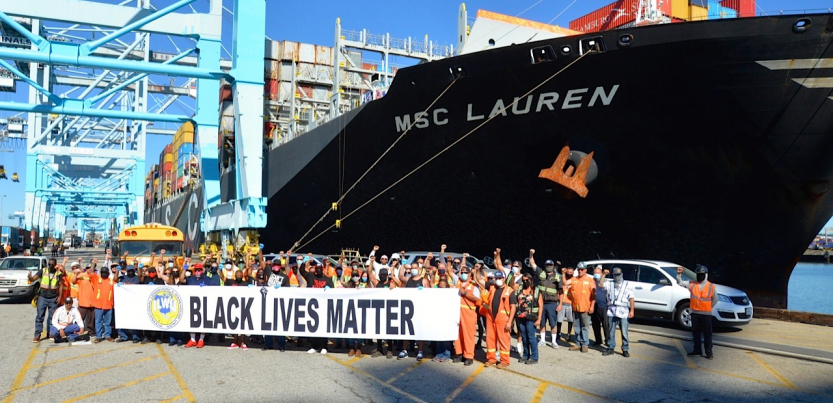
Most impressively, in June the ILWU dockers’ union twice stopped the West Coast ports in support of Black Lives Matter, demanding an end to “white supremacy” and “police terror” – once for nine minutes and once for a whole day. They chose to hold their second, all day, strike on Juneteenth, a date which celebrates the abolition of US slavery in the 1860s. (The ILWU has a tradition, having also taken action against South African apartheid for instance.)

Could we see anything similar in the UK?

We certainly have political causes which demand urgent and effective action – from racism in the police and the prison system to the Tories’ appalling handling of the pandemic, from the scandal of fire and building safety to the climate crisis. And there are few forms of action more effective than industrial action. As the Fire Brigades Union’s Firefighter magazine put it last year:

“More broadly, consider the injustices we face – like those that still plague the Grenfell community two years on. We hold meetings, we petition, we march. But imagine the change we could effect if workers were able to withdraw their labour to stand up in solidarity with other workers and the wider community.”

We saw something of the possibilities last September when groups of workers stopped work alongside the school student climate strikers.

However, such political strike action faces a huge barrier in the form of the anti-trade union laws. Put simply, since the 1980s industrial action for anything other than strictly limited industrial demands has been illegal. Workers do not have the legal right to withdraw their labour as an instrument of political or social protest.

What this means is that you can engage limited democratic self-expression – on marches, protests and so on – in your own time, but as soon as you’re on the clock, democracy and the right to protest are suspended. That is something the labour movement should challenge, not accept as inevitable.

These laws hinder struggles against racism and injustice in other ways too. They ban solidarity action by one group of workers to support another, with all the obvious consequences for fighting injustice and oppression effectively.

In a Covid crisis which has disproportionately hit black and brown workers, the requirement for lengthy balloting processes, noticed periods and the like has hindered the kind of quick, decisive action necessary to act for safety and workers’ rights. Many workers have take action in defiance of the law but it nonetheless acts as a powerful limiting force.

We should argue:

Firstly – that however limited the things we can do immediately, we should sow the ground by popularising the idea of workers’ action as not just a tool to defend and improve terms and conditions, but as a weapon in the fight against injustice. In the circumstances we face – outrage at racism, a second wave of the pandemic, runaway corporate greed and the threat to our NHS and public services – the idea of political strikes could be very popular. It needs explaining. We should demand the right to exercise democratic rights, including the right to protest, at work.

We should point to and talk about the strikes for black lives in the US, about the climate strikes, about the Italian dockers who last year refused to load weapons for the Saudi war in Yemen. We should unearth inspiring historical examples like the Australian construction workers who stopped construction sites to defend the environment, working-class communities and indigenous peoples in the 1970s.

Secondly – that all the restrictions contained in the anti-trade union laws must go. All these laws must be repealed – not just the Tories’ 2016 Trade Union act, which makes things more difficult but doesn’t touch on the fundamental limitations discussed here. They should be replaced by positive legal rights for workers and unions, including strong legal rights to strike and picket freely for any demand.

Labour Party conference has repeatedly voted to repeal all the anti-union laws, as did TUC Congress last year. But so far the bulk of the labour movement is not fighting for this.

It is all very well for Labour politicians to say they support the climate strikers, but refuse to commit to scrapping the laws that prevent workers from striking alongside them. Similarly, Keir Starmer and Angela Rayner took the knee: but do they support workers being able to legally strike against racism, or not?

Thirdly – that the labour movements need to be ambitious. What can we do to take action despite the legal barriers?

US law is not quite as clear on banning political strikes as ours is, but there are restrictions. The West Coast dockers got round them by simultaneously holding a strike for a legal demand – against privatisation of the Port of Oakland, with its consequences for African American jobs – but explicitly raising the wider political questions.

In the 2016-2018 our Picturehouse Cinema workers did something similar on a smaller scale, striking for their legal industrial demands on International Women’s Day and using the opportunity to highlight their call for maternity pay as well as wider questions of women’s liberation.

There is nothing to stop unions holding legal strikes over industrial issues but on particular dates or with messaging that links them to wider political demands.

Many unions and union branches are already in dispute over industrial questions which are also racial injustices, such as pay gaps and safety at work. Such struggles should be spread and linked to a political message.

Lastly, as unofficial grassroots industrial action during the lockdown showed, we need to build confidence to defy the anti-union laws.

Trade unions, wrote Marx in 1866, must “learn to act deliberately as organising centres of the working class in the broad interest of its complete emancipation. They must aid every social and political movement tending in that direction… They must convince the world at large that their efforts, far from being narrow and selfish, aim at the emancipation of the downtrodden millions.”

Those words echo today. If our labour movement makes itself central to the fight against injustice and oppression it will help us rebuild strength in the workplace too.

By Sacha Ismail

Labour MPs, union leaders, and grassroots activists say: free our unions!

Our new campaign statement was launched on LabourList today, bringing together Labour MPs, union officials, and rank-and-file activists to demand trade union freedom and the right to strike.

Explaining the motivation for organising the statement, Free Our Unions co-organiser Daniel Randall said: “The pandemic has reinforced how much of a barrier Britain’s anti-union and anti-strike laws are to defending and improving workplace health and safety.

“The lengthy notice periods and bureaucratic hurdles placed in front of unions are designed to slow us down and prevent us from using industrial action as an immediate response to workplace issues, and from asserting our own demands.

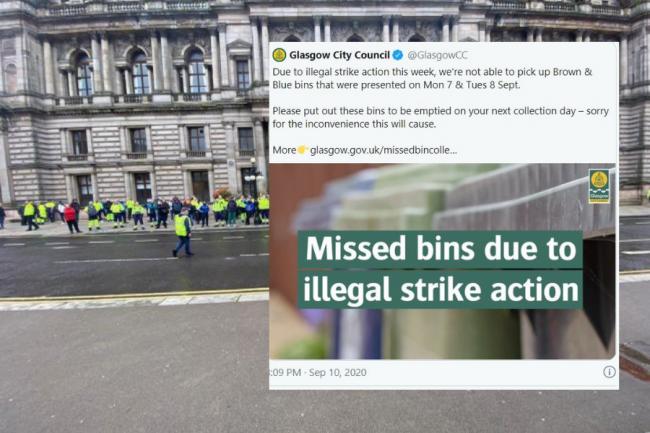
“That’s why much of the workers’ action to defend rights, safety, and conditions we’ve seen around pandemic-related issues has been ‘unofficial’, such as the Glasgow refuse workers’ walkout on 8 September.

“At the same time, workers’ ability to leverage our power over the production process as part of political and democratic self-expression is radically restricted by the ban on strikes over “political” issues.

“This ban is one of the most significant brakes on democratic action in Britain today. How much more powerful would the Black Lives Matter struggle and movements against climate change be if they could call on the power of strikes and other industrial action as well as marches and rallies?”

The text of the statement and initial signatories are below. To add your support and stay in touch with Free Our Unions, use this Google Form.

—————————————————————————————————————————–

From Covid-19 to climate change and Black Lives Matter, the multiple crises we are facing highlight the urgency of fighting the anti-trade union laws.

Workers’ rights, particularly the right to strike, are key to protecting and promoting our collective health and welfare and enforcing social change. By taking action together, workers create power to win their demands. Faced with so many injustices – deaths of key workers like Belly Mujinga, millions forced to work in unsafe conditions, the lack of action to prevent mass unemployment – it is vital that unions can be vehicles to right these wrongs.

Successive Tory governments have legislated to restrict union and strike activity; the last Labour government did nothing to repeal them. The coronavirus crisis, which has made postal ballots difficult and demanded swift and decisive action unrestricted by arduous legal procedures, has highlighted the damaging effect of these restrictions.

The Tories already have policy to further restrict rights by imposing “minimum service requirements” during transport workers’ strikes. As we move forward, they will seek to make workers pay the price for the pandemic, obstruct the demands of the anti-racism movement, and block the path out of catastrophic climate change. We will need the maximum legal and effective freedom for our movement to resist, including an unimpeded right to strike.

Both the Black Lives Matter struggle and the ongoing climate crisis are highlighting the need for a right to take action over wider issues than only wages, terms and conditions. Workers need the right to strike as an instrument of political protest and social solidarity.

We therefore commit to fighting for repeal of all the anti-union laws and their replacement with strong legal rights for workers and unions, including strong rights to strike and picket.

We welcome the policy to this effect passed at TUC Congress last year and at multiple Labour Party conferences, and will campaign actively to achieve it.

Signed (all in a personal capacity):

Nadia Whittome MP
Apsana Begum MP
Clive Lewis MP
Claudie Webbe MP
Ian Byrne MP
Mick Whitley MP
Bell Ribeiro-Addy MP

Michelle Rodgers (President, RMT)
Roger McKenzie (Assistant General Secretary, UNISON)
Hugo Pierre (National Executive Committee, UNISON)
Paul Holmes (National Executive Committee, UNISON)
Ruth Cashman (Joint Branch Secretary, Lambeth UNISON)
Simon Hannah (Joint Branch Secretary, Lambeth UNISON)
Jo Grady (General Secretary, UCU)
Henry Lopez (President, IWGB)
Sarah Woolley (General Secretary, BFAWU)
Ian Hodson (President, BFAWU)
John Moloney (Assistant General Secretary, PCS)
Chris Marks (National Executive Committee, PCS)
Bev Laidlaw (National Executive Committee, PCS)
Phil Dickens (National Executive Committee, PCS)
Riccardo La Torre (National Officer, FBU)
Ben Selby (National Executive Committee, FBU)
Hazel Danson (National Treasurer, NEU)
Patrick Murphy (National Executive Committee, NEU)
Tracey McGuire (National Executive Committee, NEU)
Rob Illingworth (National Executive Committee, NEU)
Kirstie Paton (National Executive Committee, NEU)
Nicky Downes (National Executive Committee, NEU)
Annette Pryce (National Executive Committee, NEU)
Nick Wigmore (National Executive Committee, NEU)
Daniel Randall (Assistant Chair, RMT Bakerloo branch and Free Our Unions co-organiser)

Solidarity with Glasgow bin workers!

Free Our Unions sends our solidarity to refuse workers in Glasgow, who struck on 8 September in defiance of draconian balloting restrictions.

The action was sparked by an attempt by council bosses to unilaterally increase workers’ hours. Like many workers across the country, Glasgow bin workers have been working reduced hours during the pandemic to maximise distancing in the workplace. Workers, who are members of the GMB, felt the unilateral increase would compromise distancing and was therefore a safety risk.

Following official procedures would have meant waiting weeks before any action could be taken, due to the required notice periods and the time necessary to conduct an individual postal ballot. Instead, the workers voted with their feet. To its credit, GMB did not disavow the unofficial action. The union reached an agreement with the council for a phased return to full hours over the next six weeks, which saw workers return to work on 9 September.

The council provoked a backlash by describing the strike as “illegal”, in a tweet it later deleted. Critics rightly pointed out that the strike being unofficial did not make it “illegal” as such; it simply meant that workers participating in it did not have the same legal protections from disciplinary action that they would if the strike had been official.

Anti-strike laws exist precisely to prevent action of this type: strikes that respond immediately and effectively to issues arising in the workplace. By forcing us to jump over endless bureaucratic hurdles, the UK’s legislative regime aims to render strikes after-the-fact protests rather than actions which leverage workers’ power to wrest concessions from employers. But the Glasgow workers’ action shows that it is possible to defy such laws.

There may yet be recriminations from the council, who said in their initial statement that: “Anyone involved in this illegal industrial strike leaves themselves open to disciplinary measures.” If disciplinary action is taken against any worker, the entire labour movement, not just in Scotland but throughout the UK, must rally to their defence.

Labour NEC elections: fight for free trade unions and the right to strike!

The Labour left organisation Momentum recently emailed its membership to canvas ideas for policies that Momentum-backed candidates in the elections for Labour’s National Executive Committee, standing as part of the “Grassroots Voice” slate, should advocate.

We publish a response, below, from Labour Party member and Momentum supporter Riccardo la Torre, National Officer of the Fire Brigades Union and supporter of Free Our Unions, arguing that NEC candidates should speak up for the right to strike.

Dear comrades,

In response to your call for discussion around what policies Labour should advocate and fight for, I am writing as a Labour and Momentum member, trade unionist and an organiser for the Free Our Unions campaign, to urge making the right to strike central to our campaigning.

This must include demanding repeal of all anti-strike/anti-trade union laws – not just the 2016 Trade Union Act, but all of them, including those introduced under Thatcher from 1980. We also need the introduction of positive legal rights for workers and unions, including strong rights to strike and picket. But talking about these rights without committing to fight for repeal of the anti-union laws is contradictory and empty. Our approach must be to repeal and replace.

Achieving this vital demand for our movement would only be strengthened by our candidates and campaign publicly committing to support workers who take action in defiance of the anti-union laws, as many have during the pandemic and lockdown.

Creating the legal and political space for workers to take action free of the restrictions the anti-union laws currently impose is essential.

It is essential to help workers defend and extend their rights; and also to effectively fight for and win many other left and labour movement demands. Covid-19, the Black Lives Matter struggle and the climate crisis have all highlighted this in particular ways.

There is a question of Labour Party democracy here. In recent years Labour conference has voted repeatedly for a strong stand on this – in 2015, 2017, 2018 and last year. (For a summary, see here.)

The 2019 conference was particularly clear, calling in two separate motions for “repeal of all anti-union laws”, specifically demanding the right to strike for political demands, and voting to reference back a section of the National Policy Forum report specifically on the grounds that it ignored conference policy on this.

TUC Congress 2019 also passed very clear policy from the Fire Brigades Union (see p18, here).

Even under the Corbyn leadership, there was a certain reticence about making these demands. The 2019 manifesto was a step forward, but still ambiguous. Under Starmer, we seem to be in full reverse. This despite repeated polling showing Labour members strongly support the policy passed by conference.

We have a great opportunity to recreate momentum for these crucial demands. Please feel free to get in touch to discuss further.

For free trade unions and the right to strike,

Riccardo la Torre, 
Free Our Unions 

The Tories still plan new anti-strike laws

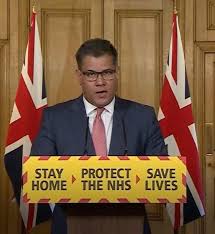
In May, Bloomberg journalist Alex Morales asked Business Secretary Alok Sharma at the Downing Street press briefing whether, in light of government rhetoric about “working with unions” and valuing essential workers, the government still planned to bring forward new laws to restrict transport workers’ right to strike.

We can only assume Sharma’s non-answer means “yes.” The trade union movement must resist the coming attack.

Sign the solidarity statement: no to strike-breaking in Tower Hamlets!

TO ADD YOUR NAME, COMPLETE THE GOOGLE FORM HERE.

On 3, 6 and 7 July, thousands of Tower Hamlets council workers are striking to stop the council’s “Tower Rewards” plan to sack its entire workforce and re-employ them on worse terms and conditions.

This attack on the workers is bad enough. But on 3 July the council called the police on bin workers, members of Unite, who refused to cross a Unison picket line. Then on 6 July the police were called again, harassed pickets and supporters and arrested one.

Earlier in the dispute the council tried to use anti-union legislation to stop the National Education Union balloting on striking alongside Unison.

It is utterly shameful that a Labour council is using the Tory anti-union laws to try to prevent workers from striking. With the arrest on 6 July, things are spiralling. Tower Hamlets council must stop such behaviour, publicly ask the police to get out of the dispute, withdraw Tower Rewards and come to an agreement with its workers instead of attacking them.

(GDPR statement: This statement was launched by Free Our Unions, the grassroots campaign against anti-union laws. Your data will only be retained if you consent to being added to the Free Our Unions mailing list, and will not be passed on to any third party.)

TO ADD YOUR NAME, COMPLETE THE GOOGLE FORM HERE.

Initial Signatories (all in a personal capacity):

Alena Ivanova, Bethnal Green and Bow CLP; IWGB
Ruth Cashman, Joint Branch Secretary, Lambeth Unison
Ana Oppenheim, National Coordinating Group, Momentum
Riccardo La Torre, National Officer, FBU
John Moloney, Assistant General PCS
Alex Heslop, Bethnal Green and Bow CLP; Labour Link Officer, Southwark Unison
Andrew Berry, Unison National Labour Link Committee; Islington North CLP
Philip Lewis, Health and Safety Officer, Camden Unison; Hornsey and Wood Green CLP
Pete Firmin, Chair, Hampstead and Kilburn CLP; CWU (retired member)
Dan Jeffery, Chair, Lambeth Unison; Streatham CLP
Gina Hayden, Ealing and Southall CLP; Unison Labour Link
Liam Cooper, Chair, Wandsworth Unison; Camberwell and Peckham CLP
Martha Levi Smythe, Unison steward; Hackney North CLP
Elaine Etim, Lambeth Unison
Erin Healy, Unison; Streatham CLP
Jeremy Drinkall, Schools Convenor, Lambeth Unison; Camberwell and Peckham CLP
Yousaf Hassan, Unison; West Ham CLP
Daniel Randall, Assistant Chair, RMT Bakerloo branch

Police called on striking Tower Hamlets workers?

As Tower Hamlets council workers begin a three-day strike to resist mass sackings, reports are coming in suggesting bosses from the Labour-run council have called the police on one of the picket lines.


This disgraceful action seems to have been a response to bin workers in Unite refusing to cross the Unison picket line, an elementary act of class solidarity which bosses will no doubt claim constitutes secondary action and breaches anti-union laws.

If these reports are accurate, they heap further shame on the Labour council – not content with attempting to sack its entire workforce and re-engage them on worse terms and conditions, it apparently wants to collude with the police to use Tory anti-union laws to break strikes, too.

Labour Party members: vote for this policy submission!

Free Our Unions is encouraging supporters who are members of the Labour Party to vote for this submission to its Policy Forum. Please share the link in your local Labour Party and union networks.

https://www.policyforum.labour.org.uk/commissions/repeal-all-anti-union-laws

Although successive Labour Party conferences have passed policy calling for the repeal of all anti-union laws, Labour leadership figures routinely focus only on repealing the most recent, the 2016 Trade Union Act.

Ensuring a strong vote for this policy submission will help keep the pressure on the Labour leadership to respect conference policy and fight for the abolition of all laws restricting workers’ and unions’ ability to organise and take action.

Tower Hamlets council workers to strike against sackings

Council workers in the east London borough of Tower Hamlets will strike on the 3, 6, and 7 July. They are fighting to stop the Labour-run council sacking its workforce and re-engaging them on worse terms and conditions. At an earlier stage of the dispute, the council had sought an injunction against one of the unions involved to stop it from balloting.

Visit the website of the local Unison branch for details of picket lines, and to see what you can do to support the dispute.

Please sign and circulate this open letter, launched by local labour movement activists, in support of the strike.