Fight is on to kill the Bill

This article is reposted from the Labour Research Department Publications website, here.

Unions say the draconian Police Bill threatens trade union activity — by restricting the right to protest and placing further restraints on picketing.

Opposition to the Police, Crime, Sentencing and Courts Bill (PCSCB) has been growing as the Bill has been making its way through Parliament.

“Trade unionists in this country face some of the most stringent anti-union laws in the developed world,” NEU teachers’ union joint general secretary Kevin Courtney told a recent Stop the Police Bill (STPB) event. The online event was organised by trade unionists, MPs, anti-racist groups and lawyers.

“We are now facing further restrictions on union members’ rights to protest,” he said. “In fact, anyone organising any sort of protest, lobby or vigil, or who might want to organise one in the future should be worried about the Police, Crime, Sentencing and Courts Bill.”

An STPB briefing for trade unionists, explains how the Bill will apply in England and Wales, and Scotland — where some of the measures will also apply. The parts that most affect trade union activities deal with public order and encampment and are set out in sections 54 to 63 of the Bill (see box).

Why trade unions need to oppose the bill

The Stop the Police Bill organising group comprising trade unionists, MPs, anti-racist groups and lawyers has produced a guide to the new law, Police, Crime, Sentencing and Courts Bill 2021: a briefing for trade unionists.

This sets out that the government’s proposals will allow the police to impose conditions on a protest where they believe the noise it generates may cause “serious disruption” to an organisation’s activities, or cause people in the area to experience “serious unease”.

These conditions could include any the police decide are “necessary” to prevent “disorder, damage, disruption, impact or intimidation”.

The Bill also gives sweeping powers to the home secretary to decide what the terms “serious disruption to the life of the community” and “serious disruption to the activities of an organisation” mean.

“This is the most alarming aspect of this Bill,” said University of York law school lecturer Dr Joanna Gilmore.

“The home secretary would be able to use secondary legislation to target specific groups using these extended powers, such as groups of workers taking effective industrial action.”

It will also increase the maximum fine for breaching conditions from £1,000 to £2,500 and, in England and Wales, there would be no need to show the person charged actually knew the conditions were in place.

It will also increase the maximum prison sentence for the protest organiser from three months to 11 months, plus a £2,500 fine. Labour MP Clive Lewis points out that this amounts to “a staggering 266% increase in criminal sanctions for organisers”.

In Scotland, the level of fines and length of maximum prison sentences are shorter.

And while the new law “would have the effect of criminalising people who unwittingly breach conditions” in England and Wales, in Scotland it would apply where people knowingly breach them.

The Bill creates a broad statutory offence of causing a public nuisance.

“This would replace the relatively obscure common law offence of public nuisance with a statutory offence,” Gilmore told Labour Research.

“It was revived recently to use against anti-fracking protestors in Preston New Road [in Lancashire] and the Bill signals an intention to start using it more widely.”

The offence includes obstructing the public, or a section of the public, in the exercise of their rights or causing them “serious harm”.

“The Bill expands the definition of ‘serious harm’ beyond any common sense understanding of the term: it includes causing someone to suffer or putting them at risk of suffering ‘serious annoyance’, ‘serious inconvenience’ or ‘serious loss of amenity’”, the briefing sets out.

It will be punishable with a jail sentence of up to 10 years.

Outlawing effective protest action

“The legislation would outlaw almost all forms of effective protest action,” according to briefing author and University of York law school lecturer Dr Joanna Gilmore.

Courtney told the STPB meeting how the planned legislation would extend police powers to intervene from big marches to single person and static protests. “Did your union branch want to organise a lobby of the council over road closures, or the closure of your nursery school, to save your local library?” he asked. “This Bill affects you. Did you want to organise a local vigil about a racist or sexist murder? This Bill affects you.”

The Bill would also extend the reasons for police intervention from the current reason to “prevent disorder, disruption, intimidation” to include preventing “impact”. It would widen the reasons for prosecution for illegal protest and increase the level of fines.

“It used to be they would have to prove you were ‘knowingly breaking the law’,” Courtney added. But “it would become you ‘ought to have known the law’. Can your union branch be confident you have read all the details, before you organise your vigil? And the Bill will mean protests can be illegal if they are ‘too noisy’.

“Might the members of the board your union branch is lobbying complain that the chanting or singing you have organised outside is too loud?”

PCS civil service union general secretary Mark Serwotka added: “If noise is an inconvenience, our 100 days of strike action with vuvuzelas would have been outlawed.” He was referring to strike action by cleaners and caterers at the BEIS business department.

“If protest can have an impact, it can be outlawed. That’s the whole point of protest, to have an impact,” he added.

Leverage campaigns

The government doesn’t specifically mention unions in any of its briefings on the Bill. But Gregor Gall, visiting professor of industrial relations at Leeds University, says there are “clear implications and ramifications” for trade unions, and these are not just in relation to protesting on demonstrations and marches.

In a briefing on the website of the Free our Unions campaign (whose affiliates include the PCS, the IWGB Independent Workers’ Union of Great Britain, and the RMT transport and FBU firefighters’ unions), Gall points out that the government has made it clear that those parts of the Bill “pertaining to public order result from its desire to clamp down on Extinction Rebellion (XR) and Black Lives Matter (BLM) activities”.

Nevertheless, as Gall indicates, the Bill’s provisions catch workers and their unions: “Critically and crucially, it is also as industrial/economic organisations which are focussed upon exerting leverage over employers at the points of production, distribution and exchange in the economy concerning the work conditions at those points of production, distribution and exchange.”

The police already have wide powers regarding picketing, and it is already regulated by a code of practice. The application and enforcement of the proposed law will depend heavily upon local police discretion.

Similar situations could arise, says Gall, to those where police have used COVID legislation on social distancing. These include the dispute at the Optare bus factory in Yorkshire in late 2020 involving socially distanced pickets being moved on by the police.

However, Gall thinks the main threat the Bill presents to trade union action is not actually in relation to picketing.

This rarely tries to prevent the movement of people and goods in and out of premises and is more about raising awareness that a strike is taking place, he says.

Instead, he warns, it is likely to have a significant effect on “new forms of collective action such as the innovations represented in leverage campaigns”.

Unions, including the Unite general union, the IWGB and the UVW United Voices of the World union use leverage campaigns, including static demonstrations like flashmobs, complete with whistles, drums and vuvuzelas, outside employers’ premises.

These are noisy, publicly visible on mainstream and social media, and highly disruptive. Unions use them to target suppliers and buyers, as well as the employer itself.

They have proved to be effective in campaigns including the 2011-12 campaign in the construction sector to prevent the introduction of the BESNA Building Engineering Services National Agreement. This would have changed national collective bargaining arrangements and reduced pay and conditions in the industry.

More recently, the IWGB and UVW have successfully employed these tactics to target gig economy employers and win improvements for workers in outsourced services in universities, for example.

Earlier this year, electricians protested outside sites, including London’s Royal Opera House, against deskilling attempts by contractors NG Bailey as part of the #No2ESO #ShutTheSites campaign.

“In a period of the decline of the strength of workplace unionism, this tactic has been important for workers and their supporters to exert leverage on employers from the outside, rather than the inside as per a conventional strike,” says Gall.

Trespass becomes a criminal offence

A new criminal offence of trespass, currently a civil matter, would apply to someone “residing” on land, even temporarily, “in or with a vehicle”, and is supported by police powers to enable police to “seize any relevant property”.

As well as representing a direct attack on the way of life of Gypsy, Roma and Traveller communities, Gilmore says this could be used to target pickets and workplace occupations where they take place on the employer’s property or that of a private landowner — on an industrial estate for example.

While examples of workplace occupations, or sit-ins, may be few and far between over recent years, Gall thinks they could well increase if the end of furlough in September 2021 results in widespread redundancies. The timing of the Bill is no coincidence.

“We know an awful lot of protest is coming because of what they are going to do,” said Serwotka. He pointed to protest action over issues ranging from climate change, discrimination and austerity policies to LGBTQ rights, pensions, self-determination and independence.

“This Bill is the Tory government tooling up in anticipation of widespread opposition on the streets and in workplaces,” Gilmore said.

Opposition to the Bill

Opposition has been mounting. In March, there were demonstrations outside parliament as MPs debated the Bill, after police broke up the Clapham Common vigil for Sarah Everard, who was abducted and murdered after setting off to walk home at night.

A coalition of over 40 activist groups have joined forces and taken to the streets a number of times to reject the Bill. The groups include Sisters Uncut, Black Lives Matter UK, Gypsy, Roma and Traveller Socialists, Disabled People Against Cuts, No More Exclusions, Women’s Strike Assembly and the IWGB. Many trade unionists joined the protests on the national day of action on International Workers’ Day on 1 May.

Gilmore coordinated an open letter, signed by more than 700 legal academics, calling for the Bill to be scrapped. The signatories highlighted a 2013 warning from the UN Special Rapporteur on the Rights to Freedom of Peaceful Assembly and of Association that the threshold for imposing conditions on public assemblies in England and Wales is already “too low”.

It “does not reflect the strict test of necessity and proportionality under Article 21 of the International Covenant on Civil and Political Rights”.

And hundreds of organisations and individuals, including trade unions, civil liberties groups, charities, campaigns and faith leaders have also signed an open letter to home secretary Priti Patel and justice secretary Robert Buckland, expressing their “profound alarm and concern” and calling on the government to reconsider the Bill.

“Not only does this Bill contain numerous threats to the right to peaceful protest and access to the countryside, criminalise Gypsy and Traveller communities’ way of life, as well as a whole host of expansive policing powers, but it is being rushed through Parliament during a pandemic and before civil society and the public have been able to fully understand its profound implications,” they said (see box).

Wider concerns

Feminist campaign group Sisters Uncut says the 300-page Police, Crime, Sentencing and Courts Bill “seeks to increase police powers in terrifying ways”.

As well as criminalising the right to protest, it “will drastically impact the lives of Gypsy, Roma and Traveller communities”.

An open letter (see main text this page) explains the Bill will create a new trespass offence criminalising “the way of life of nomadic Gypsy and Traveller communities, while the government manifestly fails to provide adequate sites and permitted stopping places”.

Signatories include TUC general secretary Frances O’Grady, Unite general secretary Len McCluskey and UNISON general secretary Christina McAnea.

The Bill will also give the police expanded stop and search powers.

The Alliance for Youth Justice, which promotes the rights of children at risk of entering, or within, the criminal justice system, welcomes some elements of the Bill. Nevertheless, it says the Bill’s overall impact will be detrimental and will exacerbate existing disparities and injustices and increase the number of children in custody.

Stop the Police Bill’s trade union briefing says “it is part of a disturbing pattern of government attempts to limit opposition and legitimise state suppression of progressive movements”.

The briefing points to the Covert Human Intelligence Sources (Criminal Conduct) Act 2021 — the “Spycops Act”, which allows the police and security services to commit crimes against anyone in the UK without fear of facing prosecution.

Sheffield Trades Council also highlights the Overseas Operations (Service Personnel and Veterans) Act 2021 and the government reviews into the Human Rights Act and administrative law.

But Gall told Labour Research: “The level of opposition is quite far behind where it needs to be. It’s growing, but small compared to the resistance to the Criminal Justice Bill 20 years ago.”

Even if protests and demonstrations do not stop the Bill from becoming law, they are still massively important. He points to the Industrial Relations Act 1971 which became law despite large protests.

After five dockers broke picketing laws under the Act and went to jail in 1972, the law became “inoperable and unenforceable”. Protests increased once the implications of the change in the law became clear and in 1974, the incoming Labour government repealed the Act.

“A stronger campaign to oppose the Bill means a stronger foundation to oppose the legislation once it becomes an Act,” Gall added.

“This Bill is a big step in the wrong direction,” said Courtney. “It’s about making freedom of assembly, freedom of speech more difficult.

“It will make trade union organisation even more difficult and community organisation even more difficult. It’s authoritarian, it’s anti-civil liberties. It’s right to resist it. And this Bill is getting a lot of opposition and we can beat it.”

He urged trade unionists to take the model motion in the STPB briefing to their branches and join the protests.
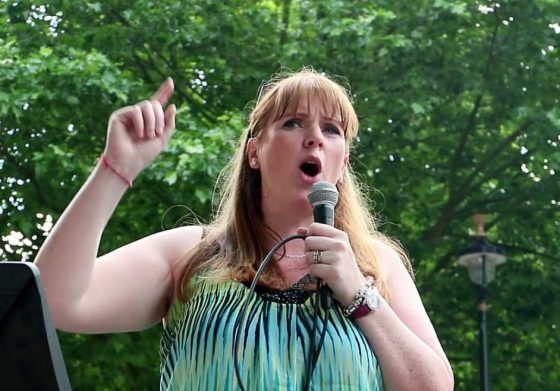
Angela Rayner: “Repeal the anti-union laws of the 1980s”

In September 2014, Labour Party deputy leader Angela Rayner (then an official of public-sector union Unison, not yet an MP) spoke at a Manchester Trades Council public meeting about the need to repeal the many anti-strike/anti-trade union laws introduced by the Tories in the 1980s and ’90s, right back to Thatcher’s first Employment Act in 1980. 

She wrote a summary of her speech for Unison North West, expressing the case briefly but forcefully.

For the full video of the speech – which clearly explains all the 1980-93 anti-union laws blow by blow, as well as making a forceful case for their repeal – click here. In it, Rayner
says: “New Labour tried to present their limited reforms as a final settlement. We have to categorically reject that. Our goal is to repeal the anti-union laws of the ’80s.”

Rayner has now been given a key role in the Labour Party’s “Power in the workplace” review of workers’ and trade union rights, together with Shadow Secretary for Employment Rights Andy MacDonald. The labour movement should pressure her and the others running the review to adopt the stance she argued for so forcefully in 2014, in line with the policies passed at Labour Party and TUC conferences.

We republish excerpts of Rayner’s 2014 speech below.


Our movement continues to be held back and hamstrung by legislation passed by the Conservative Government during the 1980s. There were [multiple] Acts passed while Thatcher was Prime Minister, and each altered the rules against the interests of working people. Some attacks were aimed at individual employment rights, some aimed at the ability of unions to function as organisations and some aimed at creating greater obstacles to effective industrial action.

We should be in no doubt that the changes made then were part of a concerted ideological attack. Thatcher even drew a parallel between how she approached fighting a war and how she approached organised labour – saying that the “enemy within” is more dangerous. We should never forget how much Thatcher, and now her heirs in the present Government, fear us and how much they want to get rid of us.

The New Labour years brought some respite, but not the reversal of the anti-union laws that we needed. Blair could still boast of the how the UK labour market was amongst the most deregulated in the western world.

Since 2010, the attack has resumed again in earnest. We’ve seen the introduction of Employment Tribunal fees – causing a 79% fall in the number of cases being heard. We’ve seen the requirements on employers to collectively consult workers in a redundancy situation relaxed and the TUPE provisions weakened. We’ve seen the provisions of the Gagging Act come into effect last Friday, putting limits on the activities of unions and other civil society organisations in the run up to the general election in May.

The worst reforms may be yet to come [after the Tories won the 2015 election, they introduced a new anti-strike law, the Trade Union Act 2016].

What we have seen is a sustained attempt – now lasting decades – to make it harder for unions to function effectively. It is a responsibility of the unions affiliated to the Labour Party to highlight how the anti-union laws hamstring our activities and our ability to defend and improve the condition of working people.

The implications of the Police Bill for workers and unions

By Professor Gregor Gall, Visiting Professor of Industrial Relations, University of Leeds

Though there are many different aspects to the 2021 Police, Crime, Sentencing and Courts Bill, the Government has made it clear that those parts pertaining to public order result from its desire to clamp down on Extinction Rebellion (XR) and Black Lives Matter (BLM) activities. And though unions are never specifically mentioned, there are clear implications and ramifications for unions. This is not just as pressure groups similar to XR and BLM whose stock in trade is protests and demonstrations. Critically and crucially, it is also as industrial/economic organisations which are focussed upon exerting leverage over employers at the points of production, distribution and exchange in the economy concerning the work conditions at those points of production, distribution and exchange.

The critical parts of the Bill with implications for unions is to be found in Parts Three and Four on ‘Public Order’ and ‘Encampment’, being set out in Sections 54 to 63. To summarise, according to ‘Police, Crime, Sentencing and Courts Bill 2021: A Briefing for Trade Unionists’ compiled by the Stop the Police Bill organising group, these would:

  • Allow the police to impose conditions on a protest, where they believe that the noise generated by the protest may cause ‘serious disruption’ to an organisation’s activities, or cause people in the area to experience ‘serious unease, alarm or unease’. The conditions could include any that the police decide is ‘necessary’ to prevent ‘disorder, damage, disruption, impact or intimidation’.
  • Give new powers to the Home Secretary to decide what the terms ‘serious disruption to the life of the community’ and ‘serious disruption to the activities of an organisation’ mean.
  • Increase the maximum fine for breaching conditions from £1,000 to £2,500. There would be no need to show that the person charged actually knew that the conditions were in place – which would have the effect of criminalising people who unwittingly breach conditions. The maximum sentence for the protest organiser would be increased from 3 months to a staggering 11 months imprisonment, plus a £2,500 fine.
  • Create a broad statutory offence of causing a public nuisance, which would include obstructing the public or a section of the public in the exercise of their rights, or causing them ‘serious harm’. The Bill expands the definition of ‘serious harm’ beyond any common sense understanding of the term: it includes causing someone to suffer, or putting them at risk of suffering, ‘serious annoyance’, ‘serious inconvenience’ or ‘serious loss of amenity’. This new offence – punishable to up to ten years in prison – would replace the common law offence of public nuisance.
  • Create a new criminal offence of trespass – currently a civil matter – which would apply to someone ‘residing’ on land (even temporarily) ‘in or with a vehicle’.

The seemingly most obvious threat to unions as industrial/economic organisations is in regard of picketing during strike action. For example, the ‘Police, Crime, Sentencing and Courts Bill 2021: A Briefing for Trade Unionists’ states the Bill: ‘… would make it easier for the Government to target groups it does not like, such as striking workers picketing outside their workplace …’. This is true in as much as picketing in Britain is a stationary affair and often noisy. And yet existing picketing law, especially over lawful numbers allowed, is very seldom enforced. This is because very few pickets, no matter their numbers above the lawfully permitted numbers, do not even try to stop – or, indeed, stop – the movement of people and goods in and out of premises. What routinely passes as picketing are congregations of striking workers and supporters who seek to make it evidently public to the employing organisation and passers-by that a strike is taking place. This usually means ‘picketing’ takes place in the morning when work begins and until about mid-morning or lunchtime (or the equivalent where shifts are not passed on 9am-5pm working hours). In effect, the ‘picketing’ last for a few hours.

Of course, that is not to say that the Bill could not have an impact on future picketing should it seek to become more effective. As the application and enforcement of the proposed law will heavily depend upon local police discretion, there could be situations akin to the instances of social distancing regulations being used by the police to disperse pickets. Thus, at the Optare bus factory in Yorkshire, the police broke up a picket in late 2020. Though this decision was successfully challenged, it indicates how laws can be applied in ways that are not germane to their original intentions. The point was underscored by police in Edinburgh dispersing a picket-line at SAICA Packaging in early 2021 using the COVID regulations. And, in one case at DHL in Liverpool in late 2020, the employer called the police to enforce social distancing.

Nonetheless, where the Bill is likely to a significant effect on the other of unions’ industrial tactics concerns leverage campaigns. As practised, in particular by UNITE, the IWGB and UVW, leverage campaigns which involved static demonstrations (like flashmobs and the using whistles, drums and vuvuzelas, etc.) outside employers’ premises are often held to be the ‘clincher’ in the success of a campaign because they are highly disruptive and publicly visible (in practice and via mainstream and social media). They also help create reputational and brand damage. Such leverage campaigns are now numerically more common that attempts at effective picketing. It should be noted here that such static demonstrations do not necessarily take place during strike action and they can be part of a campaign that does not involve strike; they can be akin to secondary action in that they can target suppliers and buyers up and down stream of the targeted employing organisation; and they can be akin to picketing in that they stop the movement of people and goods in and out of premises.

Such a tactic was highly successful in defeating in 2011-2012 the introduction of the Building Engineering Services National Agreement (BESNA) and has since been used in a similar way outside many construction sites and by the IWGB and UVW unions to end precarious work (like bogus self-employment). In a period of the decline in the strength of workplace unionism, this tactic has been important for workers and their supporters to exert leverage on employers from the outside (rather from the inside as per a conventional strike). It could have further relevance if unions used disruptive tactics against employers who use ‘just-in-time systems’ of production, where there is no safety net of a stock of components. And, we can recall that the Carr Review was launched by the Cameron-led Government in the aftermath of the 2013 INEOS Grangemouth dispute and focussed upon such tactics given their visibility and effectiveness.

There is another aspect of the Bill in regard of ‘encampment’ (Section 4). The new offence here, supported by new powers to enable police to ‘seize any relevant property’, could be used to against pickets and workplace occupations where they take place on the employer’s property or that of a private landowner. The same proviso about the paucity of effective picketing also applies to occupations, whether of the type used at the likes of BiFab in 2017 or by single construction workers in occupying a crane. But the absence of the widespread use of occupations (or sit-ins) may not continue should widespread redundancies result from the end of the furlough scheme in September 2021.

Despite the current difficulties surrounding Boris Johnson’s premiership, it is not anticipated that the Bill will not be put on the statute book because of the Tories’ sizeable (c.80 seat) majority in the Commons. To think that protests and demonstrations could stop this happening is to fail to recognise two important historical examples, namely, the Criminal Justice and Public Order Act 1994 and the Industrial Relations Act 1971. In the case of the former and with a weaker Tory majority, sizeable protests did not prevent the Bill becoming an Act. In the latter case, and again despite even bigger protests, it took the protests around the jailing of the Pentonville dockers in 1972 for breaking the Industrial Relations Act 1971 (with regard to picketing) after it came into effect that led this law to become a ‘dead letter’. Its repeal took a change in government in 1974. This suggests that the most likely and effective means of defeating the Police, Crime, Sentencing and Courts Bill when it becomes law is through a rear-guard action that makes those parts of it pertaining to protests inoperable and unenforceable as a result of protests swelling once it becomes clear in practice what the change in the law means.

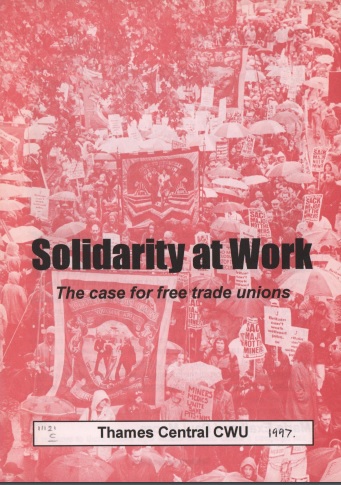
‘Solidarity at Work: The Case for Free Trade Unions’: a pamphlet from Thames Central CWU branch, 1997

Free Our Unions is proud to recirculate this pamphlet, written by Communication Workers Union (CWU) activists Maria Exall and Paul Moore, and published by the Thames Central branch of the CWU in 1997.

The arguments within it still have resonance today, and give historical context for ongoing debates about how the labour movement should approach the question of anti-union legislation.

“Workers have never been gifted anything. We’ve protested and won.”

This is a speech given by Fire Brigades Union National Officer and Free Our Unions activist Riccardo la Torre at the 2021 May Day protest in Southend in Essex. A transcript of the speech is below the video.


I’m Riccardo la Torre from the Fire Brigades Union, bringing May Day solidarity to all of you. It’s fantastic, and encouraging, to see that we’re all out here today demonstrating, protesting, which is our right and our freedom. We’re doing it in the face of a Bill that threatens that very right and those very freedoms. A bill which – I don’t apologise for this description – poses one of the most serious threats to working people, to our class, to our rights in a generation.

It directly attacks our right to have a voice, our right to stand up, our right to speak out, our right to be heard, our right to defend ourselves. It contains a perverse assault on those rights. It would allow for the police, for government, for the powers that be, to decide whether or not our protest is legitimate. Whether or not our voice is legitimate. It ain’t for the Old Bill to tell us whether our voice is legitimate, it’s not for the government – the very people we find ourselves having to protest against. Workers decide what workers’ voice is, and nobody else. We must stop this from coming in.

That voice of workers, the voice of the oppressed, the voice of the exploited, the voice of our class, the voice of protest has delivered, has won, the very freedoms we stand here with today. We’ve heard other comrades speak about it today: about the Chartists, the suffragettes, the civil rights movement. They want to silence that voice of protest. They want to silence it because it’s collective. When it’s collective and not divided, it’s stronger than them. They want to silence it because protest works.

Protest doesn’t just work in the headline wins, or in the pages of history books. We only have to look at recent history months for large and small wins. Protest stopped the European Super League. Protest delayed the very Bill that we’re talking about today. Protest u-turned the government on the decision about opening schools.

I was reading an article on the way over here, an interview with Jeremy Corbyn, and he was talking about the million people who protested against the Iraq war. He was asked whether he thinks protest works. He said there’s the immediately visible wins we can see. But it also works in other ways. Protest changes opinions, protest forms opinions; it shapes the other side of a narrative and an argument. Protest, even if not on the day, can work much further down the line. Protest can work in ways we don’t even see.

If we look at my industry, at my union, the Fire Brigades Union, at everything we have – that firefighters and control staff have – our pay, our rights, our safety, it’s been won directly or indirectly by protest, whether it’s in the workplace, on picket lines, in the streets or in Parliament. We have been gifted nothing by politicians. We’ve been gifted nothing by bosses. We’ve protested, we’ve demanded and we’ve won. We have to protect that right.

When thousands of firefighters marched on Parliament because this government unlawfully stole our pensions, we didn’t do it silently as this bill would have us do – no, we were heard and won – and I can assure you, the next time we do it, regardless of what this bill says, we will not be doing it silently and we will be heard.

Stopping this bill is vital, it’s essential to defend the rights we have, but it will only be a win to stand still. We have to go further as a movement as a movement, as organised workers, as trade unions. There is a raft of legislation out there that shackles workers, that silences working people and attacks working people, and that will continue to attack us afterwards. What I’m talking about is the anti-trade union laws. Not just the most recent, 2016 Act, but all of them, going back to the 80s. Laws that silence workers. Laws that stop workers from protesting; that tell us how we can take action, when we can take action, where we can take action and what we can take action about. It’s disgustingly undemocratic.

These laws say workers aren’t allowed to take industrial action about issues that aren’t directly related to their employment – about massive issues that affect working people every day. The climate crisis. Racism. Grenfell. It’s perverse that a parent cannot take industrial action to defend their child’s education, just because they’re not directly employed in education. We can’t take industrial action to defend the NHS, because we’re not employed in the NHS. A resident that lives in a death-trap of a home, wrapped in illegal cladding, flammable cladding, can’t take industrial action because they’re not employed in that industry.

It is perverse, brothers and sisters, and our movement has to put our eye on it, and fight to repeal all those laws. I don’t mean change them, I mean repeal them and replace them with strong rights to take action. We call on the Labour Party to be our parliamentary voice in that and demand a change, not just on the 2016 Trade Union Act, but on all trade union laws.

We have to realise this is one part of a wider agenda against working people. We’re all being attacked in our own ways. There is a White Paper coming, we believe this summer, that is attacking the Fire Brigades Union and the organised voice of firefighters even more. There is a White Paper coming on “fire service reform”, and what they mean by reform is ripping up our collective bargaining rights, and silencing our collective firefighters’ voice – the very voice that keeps firefighters alive when bosses and the government refuse to. Supported by the Home Office, supported by the fire chiefs’ council, that attack is coming our way this summer, and when it does we’ll be asking all of you to support our campaign and our fight.

If this bill and what it contains was being done in any other country that this government didn’t agree with politically, they would be calling it dictatorial – because that is exactly what it is. The bill has been delayed, not stopped. It’s been delayed, but we cannot delay our organisation and our activity to destroy it and make sure it never comes. We have to carry on activities like today. It’s great to see you today and I wholeheartedly thank the organisers. We must do more, must push on, we must do it together and collective. Happy International Workers’ Day, brothers and sisters. Solidarity.

Does a “New Deal for Workers” mean scrapping the Tories’ anti-union laws?

By Sacha Ismail

On 1 May a “May Day manifesto” by John Hendy and Keith Ewing was published in the Morning Star, under the headline “A New Deal for Workers”. (Read it in text format here.) A New Deal for Workers is a slogan that has been used by the TUC and various unions, particularly the CWU; this is a new attempt to flesh it out.

There is much in the document worth comment and discussion. On the crucial issue of the right to strike and repealing the anti-trade union laws, it is weak.

Hendy and Ewing are leading lights in the Institute of Employment Rights. In recent years the IER has focused heavily on expanding collective bargaining between unions and employers, particularly over wages, terms and conditions, increasingly fading out the issue of the right to strike. (For analysis of how the stance of the IER and its milieu has evolved, see here.) The “New Deal for Workers” manifesto reflects this trend.

In almost 4,000 words, all it has to say about the right to strike is:

“Redressing the imbalance of power also requires greater legal rights for trade unions in terms of access to workplaces and the right to strike in accordance with international law – not unlimited but freed from much of the current statutory shackles.”

Nothing is said about the Police Bill or other restrictions on the right to organise and protest either.

What does “not unlimited” mean? Why doesn’t the manifesto explain? Which of the current “shackles” do the authors think should remain?

In the 1970s, before the Thatcherite anti-union laws, it was hard enough to strike and picket effectively – as the case of the Shrewsbury 24 illustrates. We need to remove all the Thatcherite restrictions put in place from 1980 and go further by replacing them with clear positive legal rights to strike and picket.

As the motion proposed by the Fire Brigades Union and passed at TUC Congress 2019 put it: “workers need strong rights to join, recruit to and be represented by an independent union; strike/take industrial action by a process, at a time and for demands of their own choosing, including in solidarity with any other workers and for broader social and political goals; and picket freely”.

We need to repeal all the laws which contradict these rights, and enshrine rights in positive legislation (“repeal and replace”).

In terms of collective bargaining, as the IER itself used to say, “collective bargaining without the right to strike is collective begging”.

The extensive systems of collective bargaining in the post-war decades, which came to cover more than 80% of workers in the UK as opposed to 25% as at present, was to a large extent brought about and shaped by a culture of militant – very often “unofficial” – industrial action. (We leave aside here criticisms of this system from a working-class point of view.) This was possible because the post-war Labour government repealed all the restrictions on strikes and organising introduced by the Tories in the 1920s – restrictions much less extensive than the current ones – and the labour movement successfully defended these freedoms in the ’60s and ’70s.

Without restoring and expanding freedom for workers to self-organise and take action, we are unlikely to win any kind of collective bargaining system that will substantially benefit the working class.

To think that, without a major revival of strikes and struggles, the working class can organise itself to defend and assert its interests effectively, let alone confront the power of the bosses and start to transform society, is unserious. The anti-union laws were introduced precisely in order to suppress such struggles and the possibility of them reviving. We should defy them when possible and necessary. They need to go – all of them.

The 2019 TUC Congress resolved: “that the General Council will ensure that these demands [the rights set out in the section quoted above and, to achieve them, “the repeal of all anti-union laws”] are central to all campaigning around employment and workers’ rights, such as the New Deal Charter” (the idea from which the Hendy-Ewing manifest has sprung).

Yet despite the clear position taken by TUC Congress (and the conferences of many individual unions, and the Labour Party), this has not happened. Not in terms of the TUC’s campaigning; or the campaigning of most union leaderships; or organisations like the IER.

The demand to repeal the anti-union laws has continued to gain ground among trade union, Labour and left activists, but evidently not yet enough to force its adoption and championing by the hierarchies of the movement – despite conference votes.

To further illustrate what seems to be the underlying disagreement, look back to 2019. In July that year, the Morning Star published an article by a close collaborator of Hendy and Ewing, Andy Green, attacking Free Our Unions. Green argued that a Labour government “could and should… restore a right to strike without necessarily making a public bonfire of the Thatcherite Acts of Parliament”. He argued for the labour movement to “reject the absolutism” of our campaign.

For our reply, by Riccardo la Torre and Becky Crocker, see here. As Matt Wrack put it replying to Green in the Morning Star:

“It is not at all clear what he means by [not having a ‘bonfire’ of anti-union laws]. Is the argument that it is technically possible to remove the legal restrictions on trade union action imposed since 1980 without actually repealing the Tory laws?

“Or is it a political argument that we should aim for ‘a’ right to strike – undefined here – but not to remove all the restrictions? If so, what restrictions should we favour a Labour government keeping?”

It’s the same sort of ambiguity and the same problem now: “not unlimited but freed from much of the current statutory shackles”.

Those who are serious about reviving and growing the labour movement as an effective instrument of working-class self-assertion must fight for the policy agreed at TUC Congress in 2019 to be campaigned for and carried out. We must fight to overturn all the anti-trade union laws, back to the very first one introduced under Thatcher, as a necessary step in winning a strong right to strike. That is an essential part of any substantial “New Deal for Workers”.

Moreover this must be proclaimed and argued for explicitly and vocally. Making the demand to repeal the anti-union laws widely understood and popular among labour movement activists is a necessary condition for making it understood and popular in society.

Online meeting, Tuesday 18 May, 6:30pm: Disabled people for free trade unions

Tuesday 18 May, 6:30pm
Log in via Zoom here.

Britain’s anti-trade-union legislation makes it harder for unions to fight for the rights of disabled workers and disabled people more generally.

They require unions to follow inaccessible voting procedures. They put hurdles in the way of striking for disabled people’s rights. They restrict unions’ campaigning on social and political issues affecting disabled people.

In effect, the strongest potential ally of the disabled people’s movement is tied up in legal chains. In an age of Universal Credit and Covid deaths, and with disabled people’s employment and pay rates significantly and shamefully lower than average, we need free trade unions as part of this fight.

How does Britain’s trade union legislation negatively impact on disabled people? What can we do about it? Disabled trade unionists from three unions in the forefront of struggling for our rights explain the issues, and invite you to join the discussion on organising the fightback.

Meeting ID: 898 3437 3859
Passcode: 940264

Speakers:
Elane Heffernan, University and College Union
Mario Kyriacou, Tower Hamlets Unison

Chaired by:
David King, Chair, RMT Disabled Members Advisory Committee

The Police Bill, unions, and strikes (Online briefing, 6:30pm Tuesday 27 April)

An online briefing for trade unionists. Log in via Zoom here.

The Police, Crime, Sentencing, and Courts Bill poses a grave threat to the freedom to protest and dissent. Free Our Unions is hosting this online briefing for trade unionists, delivered by Professor Gregor Gall, labour movement academic and activist.

Attendees will be briefed on:

• What’s in the bill
• How it might impact strikes and other industrial action
• How it could intersect with existing restrictions on strikes and union organisation

All trade unionists welcome.

Log in here via Zoom from 6:30pm on Tuesday 27 April.

Striking for the climate? Free Our Unions public meeting, Tuesday 13 April, 6:30pm

TUESDAY 13 APRIL, 6:30PM
LOG IN VIA ZOOM HERE.

Facebook event here.

Our window to stop and reverse worsening climate catastrophe is narrowing. To defeat climate change, we need to radical action from governments, and, ultimately, a change in how our economies are organised. To achieve that, workers need to take action.

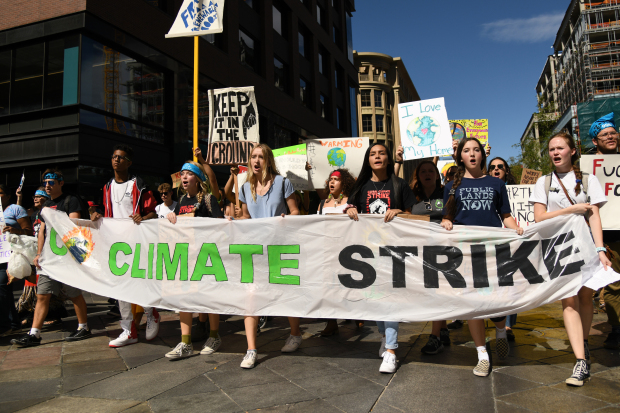
But in the UK, workers are legally prohibited from striking over so-called “political” issues, such as climate change. Many unions have supported “climate strikes” by young people, but the restrictive legislative framework we face holds us back from fully using our own power.

This public meeting will discuss that legislation, how we can confront it, and what kind of action workers might need to take to address the climate crisis.

Speakers:

Ian Byrne, MP for Liverpool West Derby
Ian is a Labour MP and a member of the Socialist Campaign Group.

Fliss Premru, Campaign Against Climate Change Trade Union Group
Fliss is a former transport worker and trade union activist, who has been active on environmental and climate issues for many years.

A Fire Brigades Union (FBU) activist
Climate change is an immediate workplace issue for fire fighters, as they deal with the impact of increasing extreme weather events. The FBU has been a leading voice in the labour movement, including the Labour Party, for a socialist “Green New Deal”, and against anti-strike laws.

An activist from Earth Strike UK
Earth Strike is a group of anti-capitalist activists active around the issue of climate change, building towards strikes to demand climate action.

…and more tbc.


Log in via Zoom here from 6:30pm.
Meeting ID: 816 0963 0008
Passcode: 937779

Composite motion for Momentum policy primary

UPDATE: The Momentum policy primary is now open. For more info, including on how to vote, click here.

Free Our Unions, the Fire Brigades Union, and two local Momentum groups (Brent and Southampton) submitted similar motions to the “policy primary” Momentum is currently running to determine which motions it will encourage supporters to submit to their Constituency Labour Parties to go forward to Labour’s 2021 conference. We have now agreed a single composite, the text of which is pasted below.

Momentum is due to publish shortlisted motions on 18 March. Momentum members will then vote in a ballot from 24 to 29 March to determine which motions Momentum will promote.

We encourage supporters who are members of Momentum to vote for our motion, and consider submitting to their CLPs.


Unshackling workers from draconian anti-trade union laws

The pandemic has amplified the need for workers to guarantee their safety and working conditions. Draconian cuts and lack of investment in public services have undermined resilience and caused workers to be further exposed to the effects of the ‘free’ market.

Waves of job cuts, attacks on terms and conditions (e.g., “fire and rehire”) and plans to scrap sectoral collective bargaining, including in the fire and rescue service, have continued throughout this crisis.

Conference notes TUC policy that workers should be: “represented by an independent union; strike/take industrial action by a process, at a time, and for demands of their own choosing, including in solidarity with any other workers, and for broader social and political goals; and picket freely”. 

Conference reaffirms the commitment to repealing all anti-union laws to ensure that workers have power in their workplaces.

This commitment includes repealing anti-strike laws, such as the ban on striking in solidarity with other workers or over political issues – an affront to democracy. These laws prevent workers from taking action directly over issues such as climate change, equality issues, and the NHS.

Conference denounces the Tories’ plan to impose new restrictions on transport workers through a “minimum service requirement”- it seems likely they will extend this to other groups of key workers.

Conference resolves that the party will actively drive trade union membership amongst all party members, campaign for the repeal of all anti-trade union laws, and that the next Labour government will repeal all anti-trade union laws.

(248 words)