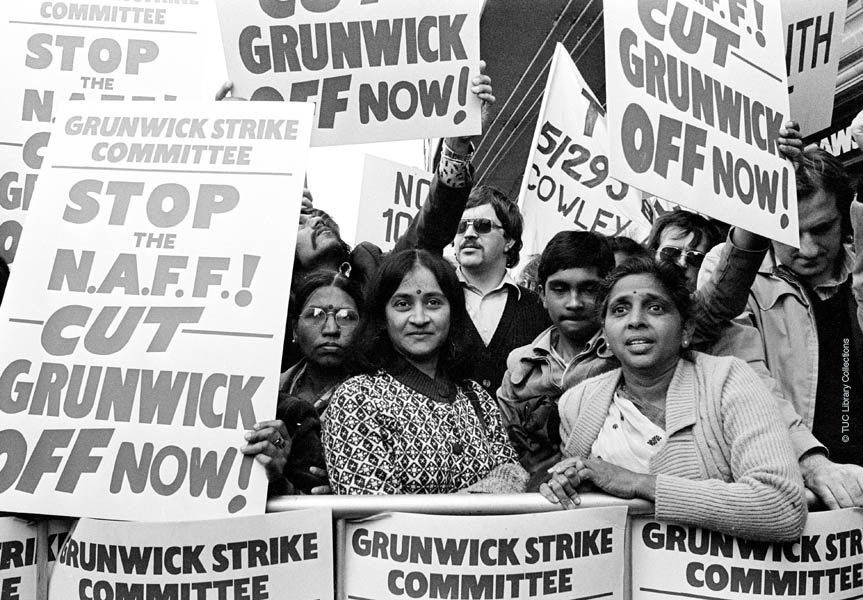
To mark Black History Month, and the 45th anniversary of the strike, Free Our Unions is hosting a public meeting on the legacy of the Grunwick strike.
The strike saw a workforce mostly made up of Asian women migrant workers take on a viciously anti-union employer, as well confronting the bureaucratic conservatism of much of the labour movement. There were significant rank-and-file mobilisations in solidarity with the strike from other groups of workers.
The legacy of the strike poses many questions about the intersections between race, gender, and class, and how we build solidarity action today in a context when it is outlawed.
SPEAKERS:
Professor Sundari Anitha, who has written and spoken extensively on the Grunwick strike and the wider issues of migrant, particularly South Asian, workers’ struggles
Pete Firmin, Chair of Brent TUC, who was actively involved in building solidarity with the strike.
Chaired by Sacha Ismail, Free Our Unions
Log in via Zoom here, or using the following details: Meeting ID: 840 8181 9821 Passcode: 145075
The Socialist Green New Deal motion the conference passed includes the following text: “Resolves to support… Repealing all anti-trade union laws so workers can freely take industrial action over wider social and political issues, for industrial action to ensure action on climate change.”
The “End Fire and Rehire” composite passed by the conference called for “the repeal of all anti-Trade Union laws”, and, noting that “TUC Congress 2020 agreed to organise a special conference on opposing the antiunion laws and a national demonstration, resolved to “encourage CLPs to support and get involved in these when they become possible.” The full text of the composite is available here.
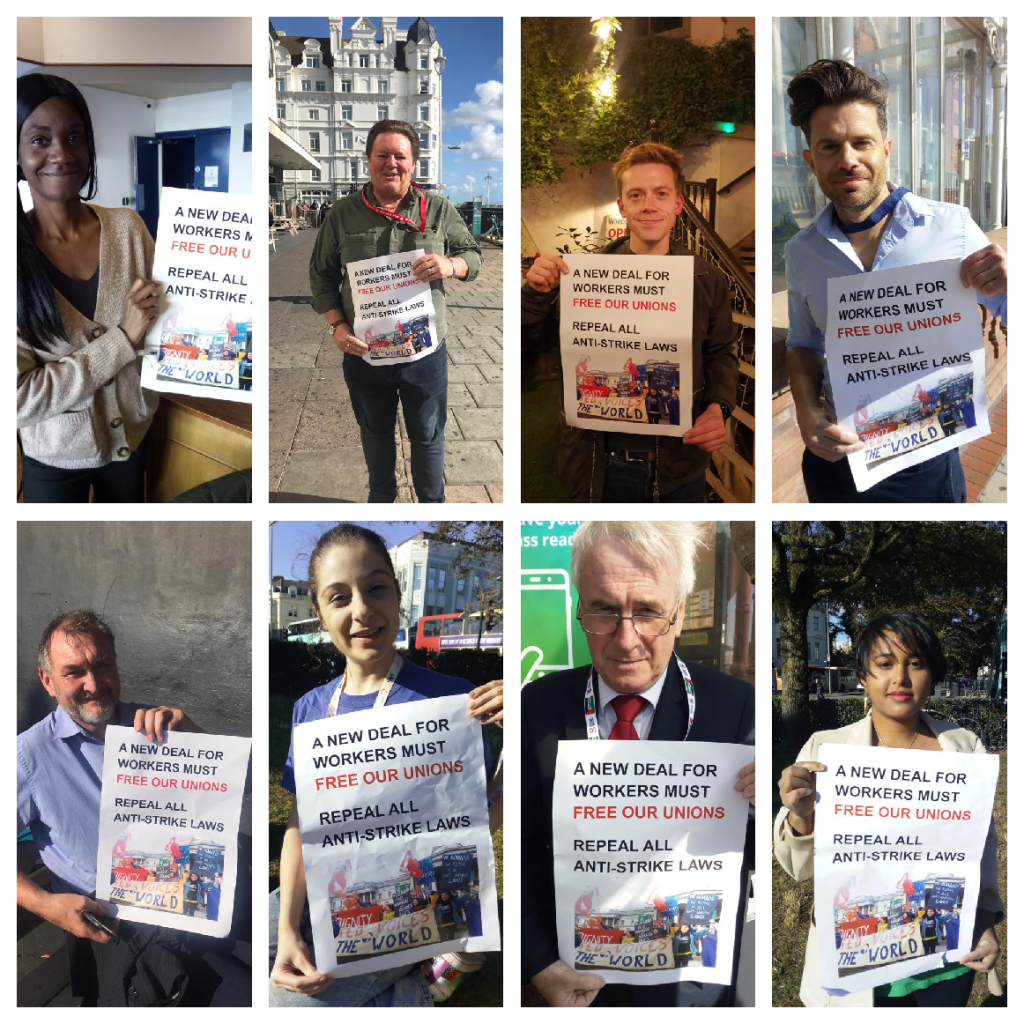
We’re thrilled with the support we’re receiving from activists across the movement!
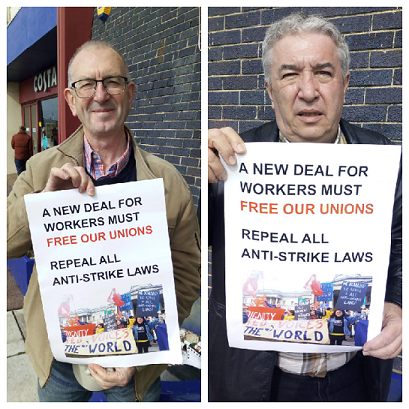
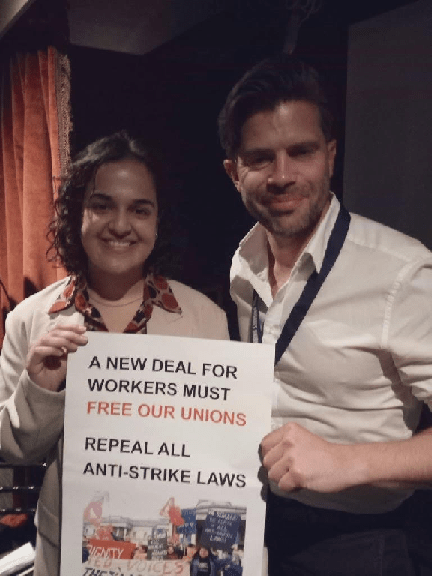
First picture, top left, L-R: Labour councillor Sally Powell, FBU East Midlands secretary Adam Taylor, GMB activist Edd Mustill, Lambeth Unison joint branch secretary Ruth Cashman, Labour activist Liz Martin, UCU activist Dan Davison-Vecchione // Second picture, top centre, L-R: Socialist Appeal activist Rob Sewell, Kirklees Unison branch secretary Paul Holmes //Third picture, top right, L-R: Labour MP Nadia Whittome and FBU National Officer Riccardo La Torre // Main picture, bottom, L-R: Unite Community activist Andrea Gilbert, BFAWU president Ian Hodson, journalist Owen Jones, FBU National Officer Riccardo La Torre, NEU general secretary Kevin Courtney, Momentum NCG member Ana Oppenheim, Labour MP John McDonnell, Another Europe is Possible Organiser Seema Syeda
This article was originally published on the Momentum Internationalists website, here.
Shadow Secretary of State for Employment Rights Andy McDonald has resigned, citing Keir Starmer’s office telling him to oppose a £15ph minimum wage and statutory sick pay at a living-wage level.
The meeting Starmer wanted McDonald to oppose these demands at was a Labour Party conference compositing meeting. Despite this, the meeting included the demands in the workers’ rights motion going forward to conference.
The other very important demand the motion includes is repealing all the anti-trade union laws, as well as commitments to aid campaigning around this. Well done to the CLP and union delegates who fought to get these things included.
Not that long before Andy McDonald resigned, he published an official Labour Party Green Paper on “A New Deal For Working People”, including many important demands and focused on reinstating collective bargaining with unions across the economy. Download it above to read.
The Green Paper is woolly on the critical issue of the right to strike but it is still very worthwhile – as good as anything the party came out with under Jeremy Corbyn. It has also been promoted by Angela Rayner during Labour conference.
Is Keir Starmer now going to attack these policies too?
This article, by the US journalist Matt Bruenig, was first published on 20 September on mattbruenig.com. We republish it here as it tells an important story: how solidarity strikes led to a group of low-paid workers winning significant wage increases. Strikes of this type are entirely illegal in the UK. Our campaign exists to resist, and fight for the abolition of, those restrictions.
Every few months, a prominent person or publication points out that McDonalds workers in Denmark receive $22 per hour, 6 weeks of vacation, and sick pay. This compensation comes on top of the general slate of social benefits in Denmark, which includes child allowances, health care, child care, paid leave, retirement, and education through college, among other things.
In these discussions, relatively little is said about how this all came to be. This is sad because it’s a good story and because the story provides a good window into why Nordic labor markets are the way they are.
McDonalds opened its first store in Denmark in 1981. At that point, it was operating in over 20 countries and had successfully avoided unions in all but one, Sweden.
When McDonalds arrived in Denmark, the labor market was governed by a set of sectoral labor agreements that established the wages and conditions for all the workers in a given sector. Under the prevailing norms, McDonalds should have adhered to the hotel and restaurant union agreement. But they didn’t have to do so, legally speaking. The union agreement is not binding on sector employers in the same way that a contract is. You can’t sue a company for ignoring it. It is strictly “voluntary.”
McDonalds decided not to follow the union agreement and thus set up its own pay levels and work rules instead. This was a departure, not just from what Danish companies did, but even from what other similar foreign companies did. For example, Burger King, which is identical to McDonalds in all relevant respects, decided to follow the union agreement when it came to Denmark a few years earlier.
Naturally, this decision from McDonalds drew the attention of the Danish labor movement. According to the press reports, the struggle to get McDonalds to follow the hotel and restaurant workers agreement began in 1982, but the efforts were very slow at first. McDonalds maintained that it had a principled position against unions and negotiations and press overtures were unable to move them off that position.
In late 1988 and early 1989, the unions decided enough was enough and called sympathy strikes in adjacent industries in order to cripple McDonalds operations. Sixteen different sector unions participated in the sympathy strikes.
Dockworkers refused to unload containers that had McDonalds equipment in them. Printers refused to supply printed materials to the stores, such as menus and cups. Construction workers refused to build McDonalds stores and even stopped construction on a store that was already in progress but not yet complete. The typographers union refused to place McDonalds advertisements in publications, which eliminated the company’s print advertisement presence. Truckers refused to deliver food and beer to McDonalds. Food and beverage workers that worked at facilities that prepared food for the stores refused to work on McDonalds products.
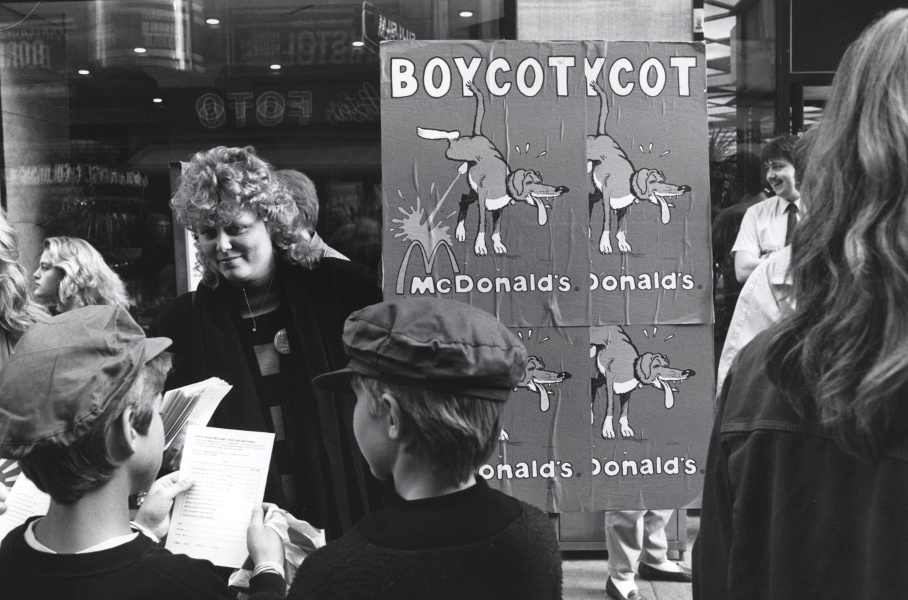
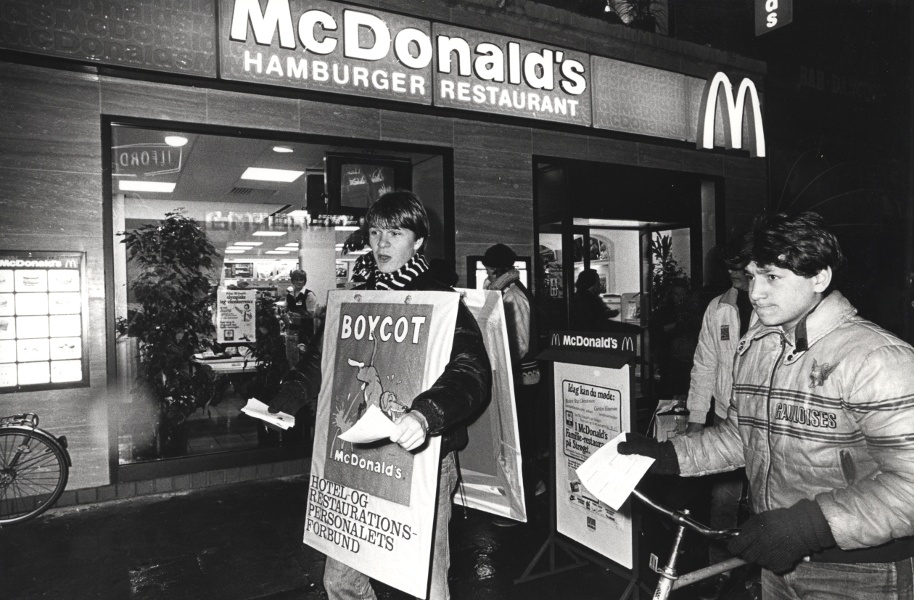
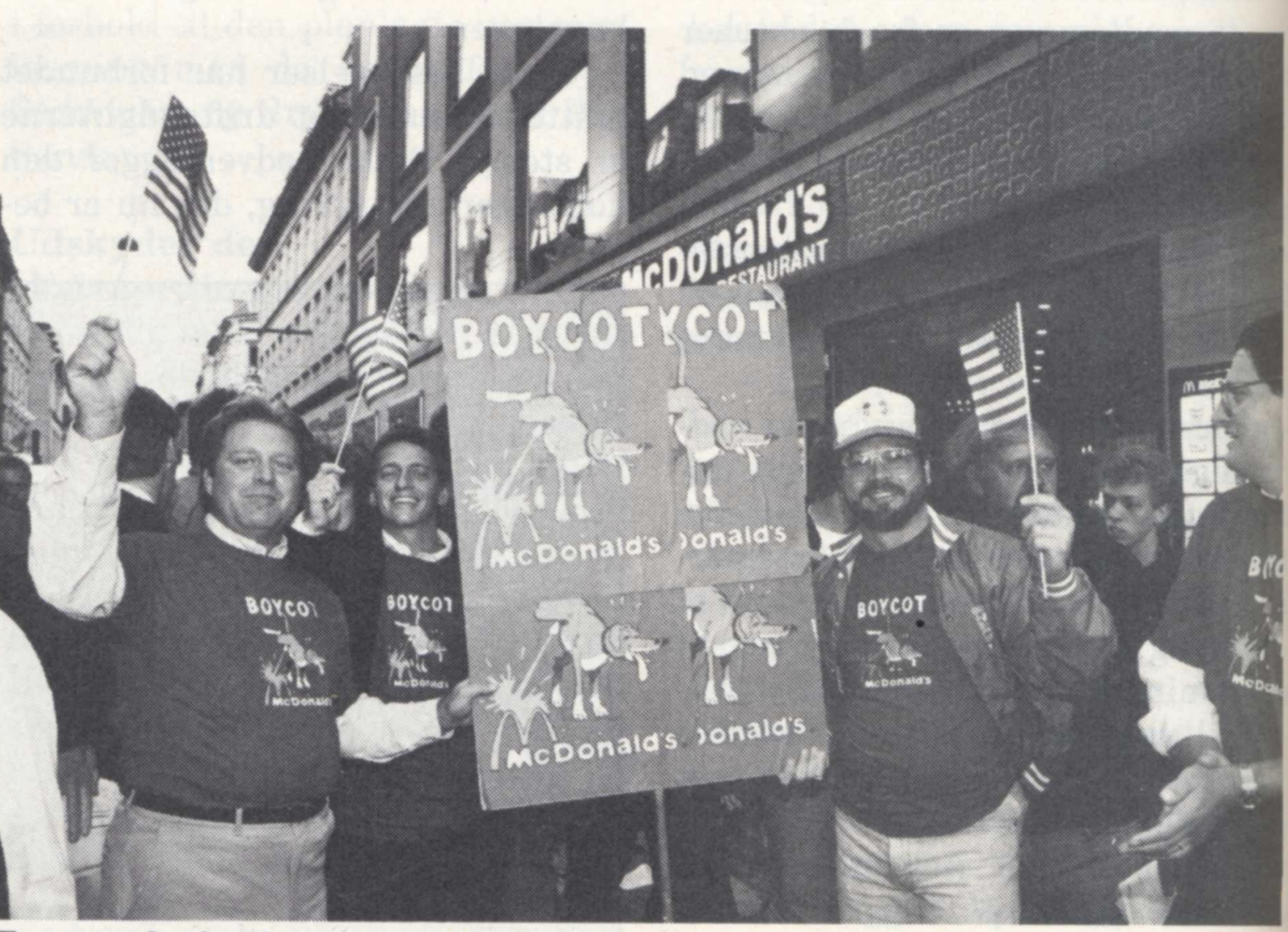
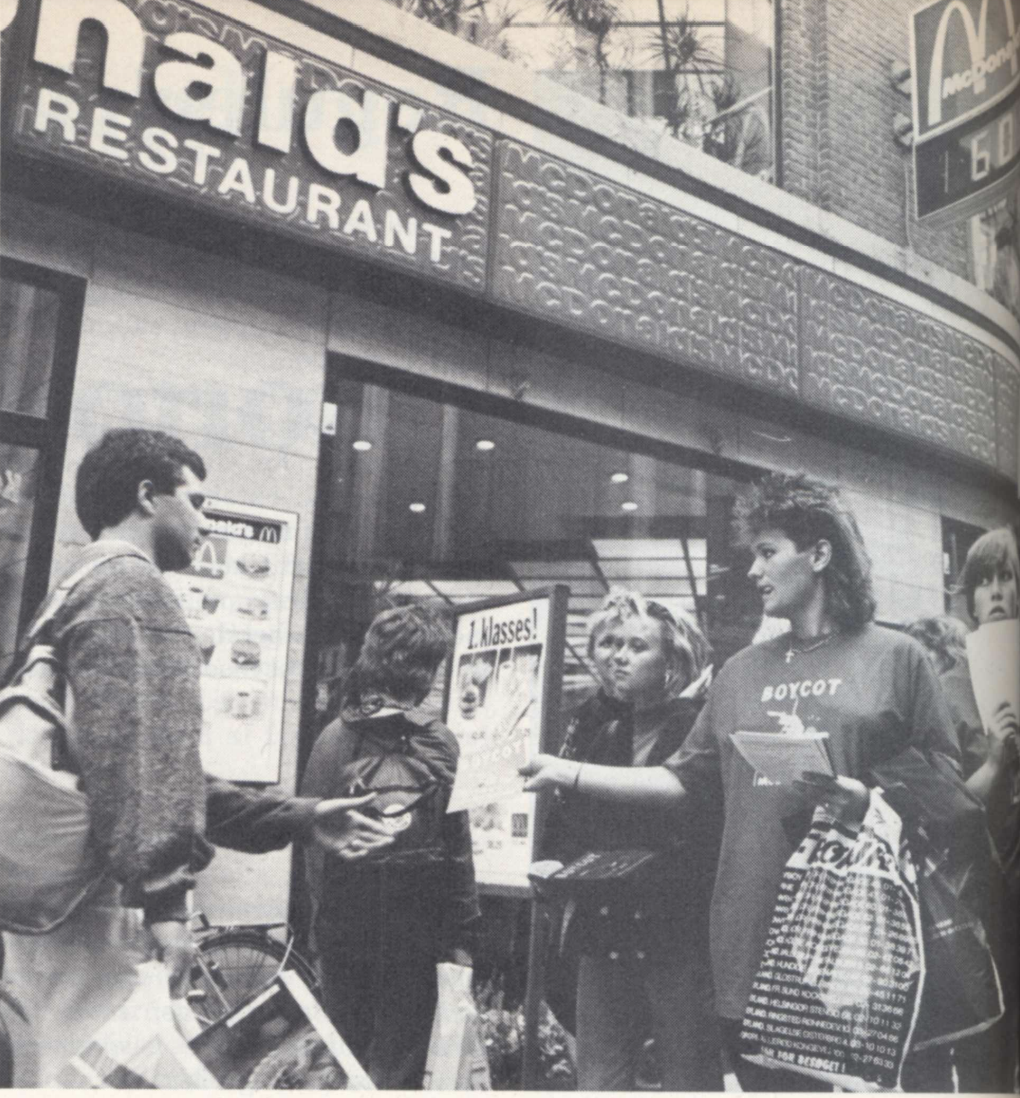
In addition to wreaking havoc on McDonalds supply chains, the unions engaged in picketing and leaflet campaigns in front of McDonalds locations, urging consumers to boycott the company.
Once the sympathy strikes got going, McDonalds folded pretty quickly and decided to start following the hotel and restaurant agreement in 1989.
This is why McDonalds workers in Denmark are paid $22 per hour.
I bring this up because people say a lot of things about the economies of the Nordic countries and why they are so much more equal than ours. In this discussion, certainly the presence of unions and sector bargaining comes up, but rarely do you get a discussion of just how radically powerful and organized the Nordic unions are and have been. If you didn’t know better, you’d think the Nordic labor market is the way it is because all of the employers and workers came together and agreed that their system is better for everyone. And while it’s true of course that, on a day-to-day basis, labor relations in the countries are peaceful, lurking behind that peace is often a credible threat that the unions will crush an employer that steps out of line, not just by striking at one site or at one company, but by striking every single thing that the company touches.
We saw this most recently in Finland in 2019 when the state-owned postal service decided to cut the pay of 700 package handlers by moving them to a different sector agreement than the one they were currently being paid under. The unions responded by striking airlines, ferries, buses, trains, and ports. In the aftermath of these strikes, the pay cuts were reversed and the prime minister of the country resigned.
When I bring this up, people sometimes respond by saying that these kinds of strikes are illegal in the US. This is a true and worthwhile bit of information, but insofar as it is meant to imply that the different legal environment is what accounts for the labor radicalism, this obviously has things backwards. The laws aren’t driving the labor radicalism, but rather the labor radicalism is driving the laws.
We can see this clearly in another recent example, this time from Finland in 2018. There, the conservative government was preparing to pass a law that would make it easier for employers with 20 or fewer employees to fire workers. The stated purpose of this was to stimulate hiring by making it easier to fire and thus less risky to hire — the usual stuff.
The Finnish labor movement did not like this idea and called a massive political strike that sidelined workers in a bunch of different sectors. In response to the strike wave, the government changed the bill so it only applied to employers with 10 or fewer employees. The strikes continued and they changed the bill again, this time so it just stated generally that courts should consider an employer’s size when adjudicating wrongful dismissal cases. This was acceptable to the unions since, according to them at least, Finnish courts already do this and so the bill was basically moot. So they stopped striking.
One can only imagine what would happen if the Finnish government tried to ban sympathy strikes in the same way the US government has here.
If we are ever going to get to Nordic levels of equality, it is really hard to imagine doing it without building a similarly powerful labor movement. You can certainly get some of the way there, such as by copying certain welfare programs, but without the unions, you’ll always be missing a key piece. And while legal and policy reforms can help build the labor movement some, the power of organized labor is not ultimately rooted in the state, but rather in the ability to halt production and wreak havoc even when the state is aligned against it.
McDonalds doesn’t pay Danes high wages because of a statutory wage floor or even because the state stepped in to enforce a collective bargaining agreement. They pay high wages because back in the 1980s, Danish unions flipped a switch and turned the whole business off, and McDonalds doesn’t want to find out whether they would do it again.
We reproduce below the speech given by Matt Wrack, General Secretary of the Fire Brigades Union (FBU), at the recent TUC Congress in support of the composite on defending the right to protest. The composite was passed, reaffirming TUC policy to demand the abolition of all legal restrictions on the right to organise and strike.
Thank you, President.
President and Congress, it’s a great privilege to follow Taj [Salam, of Unite] in this important debate on this important composite, about an important attack on our civil liberties and our ability to organise to defend ourselves.
This attack from this government is no accident. They know that they intend to force working people to pay the price of their crisis; they know that will prompt resistance; and they want to limit and attack our right to resist. That’s what this is all about, and we should have no hesitation in making clear that our movement needs to unite to defend the right to protest, to defend and extend trade union rights.
The right to protest is essential for democracy. The right to protest is what won many of our democratic rights: the right to vote was won by people breaking the law and taking direction action… the abolition of child labour, the right to oppose war – exposed so sharply in recent weeks with the withdrawal from Afghanistan and the exposure of a twenty-year failure of military operations in Afghanistan and Iraq – and of course the right to support ourselves in strikes… Protest is an essential part of what we do.
These attacks through the current proposed legislation are a threat to our class: they are a threat to trade unionists, they are a threat to climate activists, they are a threat to homeless people, they are a threat to black people, to black activists campaigning and those campaigning against racism, they are a threat particularly to the Gypsy Roma and Traveller community. They will of course allow the rich and powerful to go unchallenged –that’s the whole agenda here, resisting our ability to challenge those in power, our bosses and those in government.
We need to remember also, as mentioned in this composite, that our unions remained shackled. As has been said, we demand the repeal of all the anti-union laws. We need to demand the unshackling of our unions. I remind Congress of existing policy that says workers should:
“be represented by an independent union; strike/take industrial action by a process, at a time and for demands of their own choosing, including in solidarity with any other workers and for broader social and political goals; and picket freely.”
Those are the demands this movement must set out in the face of the attacks we face.
Let’s remind ourselves of some of those battles. When we won freedom for the Pentonville Five. When miners took strike action in support of NHS workers in 1982. And of course the famous case of the Rolls-Royce workers at East Kilbride, who took action to prevent engines from arming the Pinochet regime in Chile.
All these are acts which would be unlawful today – but we don’t apologise for them. We don’t apologise for our history of solidarity; no, we take pride in our history of solidarity which has won such progress over the decades and throughout the history of our movement.
We also know, we know in the FBU, that we have been spied on by undercover police officers. We have been spied on for our trade union activities, but we’ve also been spied on because we take part in anti-racist and anti-fascist activities. The latest attack in the guise in the form of the Covert Human Intelligence Sources Bill would license the extension of those attacks on our right to protest and organise, and enable the role of undercover policing to spy on us in those undemocratic ways.
The ruling class in this society, across the world, has a long history of attacking and undermining democracy. We have had to fight every step of the way, in this movement, and those who went before us, to demand the right to vote; the right to organise in trade unions; the right to education; the right to a health service. None of these things were given to us. They were all campaigned and fought for.
Thirty motions have been submitted to Labour Party conference (25-29 September, Brighton) from trade unions and Constituency Labour Parties specifically demanding that the party commits to “repealing all anti-union laws”. In the workers’ rights section, three of the eight motions submitted go into detail on this and are modelled closely on text from Free Our Unions, particularly the submission we made jointly with the Fire Brigades Union to the policy primary of Momentum.
We emphasise the word “all”. The figure of thirty does not include several other motions which talk ambiguously about “repealing anti-union laws” or similar, interesting and welcome as those are in terms of indicating shifts in the debate.
You can read all the motions submitted to the conference here.
In the “Green New Deal” section, the Fire Brigades Union (see p79 in document above) and the Bakers’ Union (p93) have both submitted motions which say: “Conference resolves to support… repealing all anti-trade union laws, so workers can freely take industrial action over wider social and political issues, from public safety to climate change”.
The FBU has also promoted this demand through Labour for a Green New Deal. As a result, 22 Constituency Labour Parties (p154 and p168) have submitted Green New Deal motions which say: “Resolves to support… repealing all anti-trade union laws”.
Those 22 Green New Deal motions were ruled out by the Conference Arrangements Committee but then reinstated following protests. The “Build Back Fairer” motions from Newark CLP (p158) and Newcastle East CLP (p166) have unfortunately stayed ruled out. They say: “Conference agrees that Labour will [campaign] for… repeal of all anti-union laws”.
In the workers’ rights section, the motion from Derby South CLP (p232) “calls the Labour Party to work closely with the TUC, STUC, and individual unions to campaign for… repealing all anti-trade union laws”.
Then there are the three motions focused specifically on repealing the anti-union laws:
The motion from Aberconwy CLP (p237) says: “Conference commits to repeal all of the Conservatives’ anti-union laws and further commits to their replacement with a progressive code of labour rights using the proposals set out in Labour’s 2017 and 2019 Manifestos as the starting point. This commitment includes repealing anti-strike laws, such as the ban on striking in solidarity with other workers or over political issues; they prevent workers from taking action directly over issues such as climate change, equalities and, the NHS. Conference denounces the Tories’ plan to impose new restrictions on transport workers through a minimum service requirement that may well be extended to other groups of workers.”
The motion from Macclesfield CLP (p239) says: “Conference notes TUC policy that workers should be: represented by an independent union; strike/take industrial action by a process, at a time, and for demands of their own choosing, including in solidarity with any other workers, and for broader social and political goals; and picket freely. Conference reaffirms the commitment to repealing all anti-union laws to ensure that workers have power in their workplaces. This commitment includes repealing anti-strike laws, such as the ban on striking in solidarity with other workers or over political issues – an affront to democracy. These laws prevent workers from taking action directly over issues such as climate change, equality issues, and the NHS. Conference denounces the Tories’ plan to impose new restrictions on transport workers through a minimum service requirement, and any future extension of this plan to other groups of key workers. Conference resolves that the party will… campaign for the repeal of all anti-trade union laws; oppose the introduction of any new anti-trade union laws; and that the next Labour government will repeal all anti-trade union laws.”
The motion from North East Bedfordshire CLP (p240) says: “The pandemic, in which many workers have needed to take fast, decisive action to guarantee safety for themselves, their loved ones, and the wider community, without going through an arduous bureaucratic process, has underscored the need to scrap all anti-strike laws. So does the wave of job cuts and attacks on terms and conditions (e.g., fire and rehire). Other anti-strike laws, such as the ban on workers striking in solidarity with other workers, and on striking over political issues, are also an affront to democracy. They prevent workers from taking action directly over issues such as defence of the NHS, climate change, or racism. Conference denounces the Tories’ plan to impose new restrictions on transport workers’ strikes through a minimum service requirement. It seems likely they will extend this to other groups of key workers. Conference notes TUC Congress 2020 agreed to organise a special conference¦ on opposing the antiunion laws and a national demonstration. The party will encourage CLPs to support and get involved in these when they become possible. Conference reaffirms the party’s opposition to all anti-union and anti-strike legislation, its commitment to repealing all such laws when next in government, and to legislating to enshrine workers’ rights to, as per TUC policy: join, recruit to, and be represented by an independent union; strike/take industrial action by a process, at a time, and for demands of their own choosing, including in solidarity with any other workers, and for broader social and political goals; and picket freely.”
These last three motions are closely modelled on texts promoted by Free Our Unions, and we know our supporters were involved more or less directly in formulating and promoting some of the other motions too.
Labour Party conference passed to policy repeal all the anti-trade union laws in 2015 and 2017 and in passing in motions on other issues in 2018 and 2019 (see here). We should build on those votes by passing strong and detailed policy this year, and demanding the party campaigns for it as part of the “New Deal for Workers” it has started to talk about.
TUC Congress, which was held online again this year from 12-14 September, has passed a composite motion which “resolves to campaign for the repeal of all anti-trade union laws and for the positive legal rights for workers to take action”.
The motion was proposed by Unite and seconded by the Fire Brigades Union. The text quoted was submitted by the FBU (full composited motion below; for links to the motions which were composited together see here).
We are also encouraged to see such a clear stance against the Police, Crime, Sentencing and Courts Bill, which as our briefing by Gregor Gall explains poses a huge threat to workers and trade unions specifically.
But passing policies at conferences can only be the beginning of a fight. The TUC now needs to organise active campaigning to resist the Police Bill, and push back against restrictive anti-union and anti-strike laws.
C11 Tory attacks on our rights: defend democracy, trade unions and the right to protest
Congress notes that the increasingly authoritarian legislation introduced by the Conservative government poses a threat to the UK’s democracy, and our fundamental civil and human rights.
Congress believes that the Police, Crime, Sentencing and Courts Bill is a huge attack on the right to protest effectively, while the Covert Human Intelligence Sources (Criminal Conduct) Bill licences undercover operatives from state agencies to commit criminal offences in the course of their deployment.
Congress notes that many MPs and civil society groups have raised concerns about the Police, Crime, Sentencing and Courts Bill being rushed through without proper scrutiny, despite being widely seen as harmful to democracy and human rights.
The Tories are centralising wealth and power. They are terrified of the threat of growing discontent and protest against their policies of the vicious cuts that we have seen over the past decade, their cuts to come, and the dangerous ‘divide and rule’ strategy they have embarked on.
There is growing opposition to this draconian agenda throughout the labour movement, civil society and communities, defending the right to resist this government. The trade union movement has a proud history of protesting – and advancing the right to protest – as part of the struggle for worker and democratic rights in this country, from the Suffragettes and Tolpuddle Martyrs to the poll tax revolt, Fridays for Futures and Black Lives Matter.
Congress believes that trade union activity will be targeted by the Tories’ authoritarian measures and that unions must be central to the fight to defend democracy.
Congress resolves to:
i. campaign with civil society groups against specific measures of the Police, Crime, Sentencing and Courts Bill, mobilising trade unionists for campaign events, including a joint union rally, and against the Covert Human Intelligence Sources (Criminal Conduct) Bill
ii. oppose and actively campaign against any attempts to scrap or curb the Human Rights Act
iii. campaign for the repeal of all anti-trade union laws and for the positive legal rights for workers to take action.
Mover: Unite Seconder: Fire Brigades Union Supporters: UNISON, Public and Commercial Services Union
Get involved in Free Our Unions by joining us at our next open organising meeting, at 6:30pm on 14 September, via Zoom.
We’ll be making plans for our next public events, as well as discussing producing new materials and resources. Our organising meetings are open to anyone who supports the aims of our campaign.
Join us via Zoom here, or by using the following log-in details:
We publish this article in a spirit of a debate and discussion. We welcome responses from other activists.
During Unite’s recent general secretary election, Free Our Unions supporters in the union campaigned to raise the issue of the anti-union laws and the right to strike – primarily through a statement you can still support here .
We hope to continue this initiative and build on the connections we made in the months ahead. Given the importance of Unite in the UK labour movement – it’s the second biggest trade union and by far the biggest in the private sector – and the buzz of discussion now beginning in and around the union, it can play a crucial role here as elsewhere.
During the election, we encountered a fair few responses to what we were raising – usually from people who were supportive – along the lines of: “It’s not enough to raise this issue, as Unite does already. We need active campaigning around it.” This spirit is absolutely right, obviously. It’s true that we need to mobilise Unite activists, bodies, and the whole union in active public campaigning. But it’s not quite right that the union already raises the demand, but not actively enough. In general it hasn’t raised it at all. That’s why it’s so important to get Unite activists talking about the issues.
The policy agreed by Unite members’ representatives at the last Policy Conference, in 2018, is clear, modelled in fact on Free Our Union’s founding statement:
We need abolition of the anti-trade union laws, which hamstring workers organising and taking action, and their replacement with strong legal workers’ rights…
We applaud the 2017 Labour Party conference’s unanimous call for repeal of not just the 2016 Trade Union Act, but also the anti-union laws introduced in the 1980s and 90s by the Tories and maintained after 1997; and for a “strong legal charter of workers’ rights”, “for unions to be effective workers need an effective right to strike”.
… campaign to repeal the Trade Union Act 2016 and previous Tory anti-union legislation in favour of new legislation guaranteeing trade union freedoms… Campaign for strong legal rights for workers to join, recruit to and be represented by a union; strike/take industrial action by a process, at a time and for demands of their own choosing, including in solidarity with any other workers and for broader social and political goals; and picket freely…
(For the full policy and links to the policy conference document, etc., see here.)
But what Unite has said and done as a public campaigning force is not in line with this policy. Like many other unions, Unite has avoided calling for repeal of the all the anti-union laws, instead calling for repeal of only the 2016 Trade Union Act, and calling for measures to promote collective bargaining, including sectoral collective bargaining.
But well over two decades before the 2016 Act was passed, the right to strike had already been radically curtailed, with all the Thatcherite anti-union laws already in place. And, as the Institution of Employment Rights once put it well, “collective bargaining without the right to strike is collective begging”. (For discussions of how collective bargaining, separated out from the ability to organise and strike, has come to be treated as a panacea by some in the labour movement, see here and here.)
In the run up to the 2019 TUC Congress, in response to the growth of Free Our Unions, Unite EC member Andy Green published a criticism of FOU in the Morning Star. Riccardo la Torre and Becky Crocker replied for the campaign here, and Fire Brigades Union general secretary Matt Wrack replied in the Morning Star.
At the 2019 TUC Congress Unite got words inserted into the FBU’s text which tended to weaken it: “Congress agrees to campaign, and encourage affiliated unions and trades councils to campaign, for the repeal of all anti-union laws, which may be given effect by new permissive legislation [emphasis added], and their replacement with strong legal rights, including to strike and picket; and for a clear commitment on this from Labour.” The extra wording was clearly in line with Andy Green’s argument in the Morning Star that it is not necessary to repeal the Thatcherite laws. (Unfortunately the TUC has anyway not yet acted on the policy its Congress passed.)
It is important to turn Unite around on all this, so Unite members can play our rightful role in getting the broad labour movement to campaign effectively for working-class interests, by seeking with determination to restore workers’ freedom of struggle. And we have a solid base for this stance in the policy passed by our last Policy Conference.
We should call on our new general secretary Sharon Graham and the rest of our leadership to take up this issue with vigour. Most important, though, Unite members should get organised to raise and campaign on it.
Empower the Unions, the new initiative launched by Earth Strike UK and supported by Free Our Unions, is holding a workshop at Extinction Rebellion’s ongoing protests in central London.
The workshop, entitled “How Workers Can Fight Climate Change”, will take place on Friday 27 August at 13:00. It is currently scheduled to take place near the Bank of England, but as the ExR protests are mobile, this may change. Keep an eye on the Facebook event for up-to-date details.
As floods and fires devastate large areas of the world, the urgency of tackling climate change has never been clearer. Yet emissions continue to rise higher year after year.
How can we win the change we need? What role can workers and unions play? What historic examples can we look to for inspiration? Come to our meeting this Friday, 1pm, at the “Fight Climate Change, Organise at Work” stall by the Bank of England occupation, for a meeting on these questions — with plenty of time for discussion!
Speaker: Tyrone Falls, National Education Union activist